














The global IT outsourcing market is expected to reach $462 billion in 2026 and grow at a 9.3% annual rate through 2033, according to Coherent Market Insights. Behind that headline number sits a specific kind of vendor that most companies eventually hire but few understand well: a software house. These firms now build a significant share of the world’s custom enterprise applications, internal tools, and customer-facing products.
If you have never bought software services before, the labels can be confusing. Software house, software development company, IT consultancy, dev shop, agency – all overlap, all sound similar, and all suggest slightly different things. So what is a software house?
A software house is a service company that designs and builds custom software for other businesses, combining engineers, designers, project managers, and QA staff into project teams that ship working products on a contract basis. This article unpacks what that really means in practice: who works inside a software house, what services you can buy from one, the engagement models on offer, and how to spot a credible partner before you sign anything.
What is a software house?
A software house sits in a specific spot in the technology supply chain. It sells engineering capacity and product knowledge to clients who either lack the in-house team to build software themselves or want to move faster than internal hiring allows. The category covers everything from five-person studios to organisations of several hundred developers, and the term is most common in Europe – the default label across the UK, Poland, Germany, Italy, and the Nordics – while North American buyers tend to say “software development company” or “dev shop” for the same thing.
Software house vs. software product company
The clearest distinction is between a software house and a software product company. A software product company (think Salesforce, Microsoft, or a SaaS startup) builds one product and sells it to many customers under a subscription or licence. A software house builds many products, each for one customer, under a project or hourly contract. The product company's revenue scales by adding seats; the software house's revenue scales by adding billable engineering hours.
Software house vs. freelancer or staffing agency
Freelancers are individual developers who work directly with a client. Staffing agencies recruit developers and place them inside the client's team to work under the client's management. A software house provides a complete delivery team that runs the project end-to-end – product discovery, design, development, QA, deployment, and ongoing support – with its own project management and methodology. The shorthand is: a freelancer is one person, a staffing agency rents you people, and a software house ships you a finished product.

Services and roles inside a software house
Most software houses offer some version of the same service menu, but the depth and quality vary widely. Understanding what sits behind each service helps you evaluate proposals and avoid overpaying for capabilities you do not need. A serious software house can run any of the streams below, and the better ones do all of them in-house instead of subcontracting silently.
The standard service menu
Beyond pure development, most software houses also handle product discovery, architecture, UX design, third-party integrations, and post-launch support. Common offerings include:
- Custom web development – greenfield builds in stacks like React, Next.js, Laravel, Node.js, or .NET, including responsive front-ends and headless back-ends;
- Custom mobile development – native and cross-platform apps built with Flutter or React Native, covering both iOS and Android;
- UX & UI design – user research, wireframing, and prototyping translated into polished interfaces, from early discovery workshops through to developer-ready design systems in Figma;
- Legacy system modernization – rewriting or replatforming older codebases onto newer technologies, often the most valuable service for established companies (see our deep dive on legacy app modernization for the why and how);
- Systems integration – wiring up CRMs, ERPs, payment gateways, identity providers, or industry-specific platforms so they exchange data cleanly;
- Cloud and DevOps – architecting AWS, Azure, or GCP deployments, building CI/CD pipelines, and managing infrastructure as code;
- AI and data engineering – building data pipelines, embedding LLMs into existing products, or training custom models on domain data;
- Maintenance and managed services – fixing bugs, adding small features, monitoring uptime, and handling upgrades after launch.


Roles inside the team
A software house team usually contains five to nine people on any given project. The exact mix shifts with project type, but you can expect to interact with most of these roles:
- Project manager or delivery lead – your day-to-day contact, owns timeline and scope;
- Business analyst or product manager – translates your requirements into user stories and backlog items;
- UI/UX designer – produces wireframes, prototypes, and visual design systems;
- Software engineers – front-end, back-end, and full-stack developers, plus specialists like AI software developers on AI-heavy projects;
- QA engineer – writes test plans, runs manual checks, and builds automated test suites;
- DevOps engineer – handles deployment, infrastructure, and observability;
- Tech lead or architect – sets the technical direction and reviews code.
Domain expertise as a differentiator
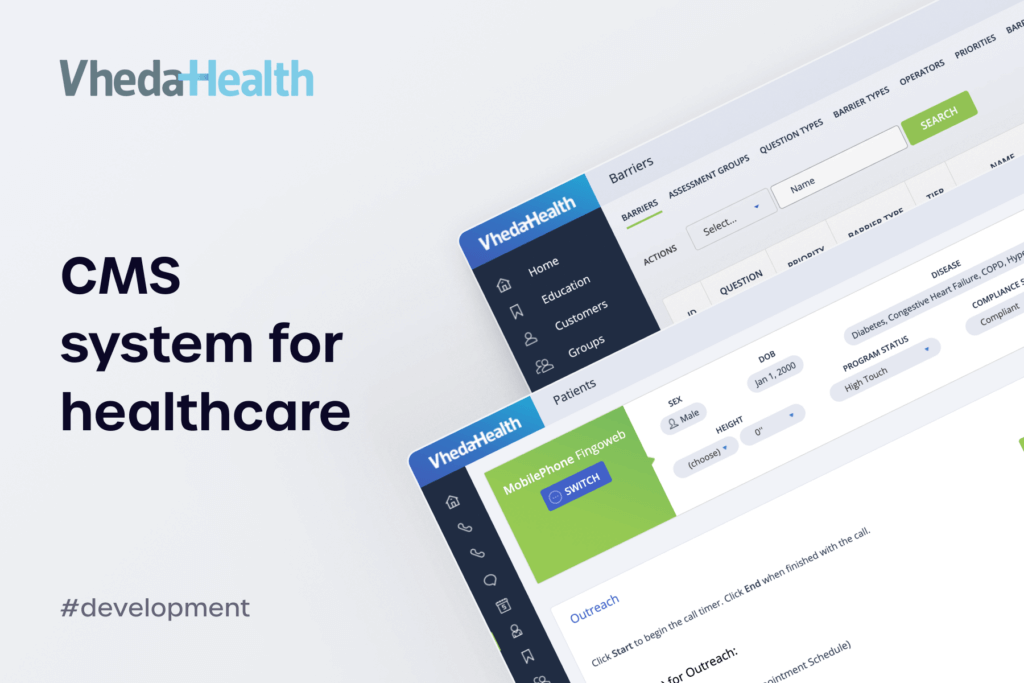
Two software houses can have identical service menus and produce wildly different results because of domain knowledge. A team that has built five healthcare apps knows what HIPAA, HL7, and medical device integration require before you ask. A team that has built five digital signage systems already knows about Tizen, WebOS, and content distribution networks. Ask any potential partner which industries they have shipped products into – the answer matters more than the technology stack they pitch.
What is a software house? The four main engagement models
The engagement model decides who carries the risk, how flexible the scope can be, and how you will feel about the relationship six months in. Most software houses offer some version of all four models below, and the right choice depends on how clear your requirements are and how much control you want to keep. If you want to learn more about working with us, check out rules of cooperation with Fingoweb.
Fixed-price projects
You agree on a defined scope, a defined deliverable, and a defined budget. The software house carries the risk if the work takes longer than expected. Fixed-price suits short projects with clear, stable requirements – a marketing site rebuild, a one-screen kiosk app, a documented API integration. It rarely suits anything where requirements will evolve, because every change becomes a contract amendment, and amendments slow everything down.
Time and material
You pay for the hours worked at agreed rates, and the scope can flex as you learn. Time and material (T&M) is the most common model for medium and large projects because it matches how software gets built in practice – iteratively, with discoveries along the way. A software house running on T&M typically commits to a sprint cadence (every two weeks), reports hours weekly, and lets you reprioritise the backlog at any sprint boundary. The trade-off is an open-ended budget unless you set a cap. Our take on the pros and cons of outsourcing development covers how to keep T&M engagements predictable.

Dedicated development team
With a dedicated development team, you pay a fixed monthly fee or time-and-material rate for a stable group that works exclusively on your roadmap. A dedicated development team behaves almost like an extension of your own staff – same Slack, same standups, same backlog – but is employed and managed by the software house. This model fits companies running multi-year product builds or large feature roadmaps where they need continuity but do not want to hire directly.
Staff augmentation
You add specific software house engineers into your existing team, usually one or two at a time, and they report to your own management. Staff augmentation is the cheapest model on paper because there is no overhead for project managers or designers, but it works only when your in-house engineering function is already strong. If you do not have someone internally who can write specs, review code, and run sprints, staff augmentation will quietly stall.
| Model | Best for | Risk owner | Flexibility |
|---|---|---|---|
| Fixed-price | Clear, stable scope | Software house | Low |
| Time and materials | Most builds with evolving scope | Shared | High |
| Dedicated team | Multi-year roadmaps | Shared | High |
| Staff augmentation | Filling specific skill gaps | Client | Medium |
Choosing and working with a software house
Picking a software house is mostly about reducing your downside. Almost any reputable shop can write working code; what separates the best partners is communication discipline, honest scoping, and a willingness to push back when your idea is wrong. A short, structured selection process catches most of the risks before they cost you money.
Signals of a credible software house
Look for the substance, not the surface. A polished website with stock images of happy developers tells you nothing; a detailed case study with named clients, measurable outcomes, and the architectural choices that drove them tells you a lot. Specifically, look for:
- Named case studies with results, not anonymous "leading retailer" placeholders;
- Engineers in client meetings, not just sales people – you should be able to talk to the people who will build the work;
- Clear methodology – a written explanation of how they run sprints, manage code review, and handle QA, including a documented SLA with named priority tiers and concrete response times for critical issues
- Long client tenure – clients who have stayed three or more years signal that the work holds up after launch;
- Reasonable Clutch and review scores – verified client feedback is hard to fake, and a pattern of late deliveries or scope disputes will show up there
- Documented continuity plan – named backups for every developer on your project and documentation maintained well enough that the work could be handed over at any poin
Red flags to watch for
Most failed software house engagements share the same warning signs. A vague proposal that gives the same headline price for very different problems usually means the team has not thought through your specifics. Pressure to sign before you have seen a technical lead, unrealistic timelines like "two weeks for an MVP," and refusal to provide code samples or technical interviews with the proposed team are all reasons to walk away. If a software house is reluctant to let you talk to the engineers who will do the work, the proposal is built for sale, not for delivery.
Inputs to bring to the first call
You will get better proposals if you arrive with structured inputs. At minimum, prepare: the business problem in one paragraph, three to five must-have features, any non-negotiable constraints (deadlines, compliance, existing tech), and rough budget bands. For larger builds, walk through our guide on how to plan and budget software development projects before you start contacting vendors.
Phases of a typical engagement
A standard software house engagement runs through five phases. The time of each phase depends on the size of the project:
- Discovery and scoping – the team interviews stakeholders, audits existing systems, and produces a backlog plus an estimate.
- Design – wireframes, prototypes, and visual design.
- Development – iterative sprints with regular demos and a working build at the end of every two weeks.
- QA and launch – final test pass, deployment, and any soft launch.
- Post-launch support – bug fixing, small features, and infrastructure monitoring under a separate contract, with weekly time reports, a maintained changelog, and defined response times per issue severity.
If you are evaluating partners for a custom build, Fingoweb's software development services span web, mobile, AI, and digital signage stacks, with dedicated teams and project-based engagements available – useful both as a benchmark and as a starting point for your shortlist.

FAQ - What is a software house?
What is a software house? Whats the difference between software house and an IT consultancy?
An IT consultancy mostly advises. It produces strategy documents, technology assessments, and architecture recommendations, often without writing code. A software house builds. Some firms blend both roles, offering consulting in the discovery phase and engineering for delivery, but the core skill of a software house is implementation, not advice.
How big is a typical software house?
The category is broad. A useful split:
- Small (5-30 people) – one or two project teams, deep specialisation in a stack or industry;
- Medium (30-150 people) – multiple parallel teams, broader service menu;
- Large (150+ people) – often called software services companies or consultancies; multinational reach.
Most successful client engagements happen with small and medium software houses, where senior staff still touch the work.
Are software houses only for startups?
No. Startups use software houses to launch MVPs without hiring an engineering team, but the larger budgets come from mid-sized and enterprise clients who hire software houses for legacy modernisation, internal tool development, and capacity overflow when their in-house team is fully booked. A well-run software house bills more revenue from enterprises than from startups.
How do software houses price their work?
Pricing depends on the engagement model and the talent mix. Senior European developer rates typically sit between $50 and $120 per hour as of 2026; North American rates run higher. Fixed-price work is quoted on the total scope; dedicated teams are billed monthly. Always ask whether the quote includes project management, QA, and DevOps – cheap rates often exclude these and become expensive later.
Where are most software houses located?
Software houses are concentrated in Central and Eastern Europe (Poland, Ukraine, Romania, Czech Republic), India, Latin America, and Southeast Asia. Each region has trade-offs around time-zone overlap, English fluency, and cost. Polish software houses, for example, sit in the same time zone as Western Europe and have strong engineering talent pools, which is why many UK and Nordic companies work with them.
What should I expect from the first meeting with a software house?
The first call is a discovery conversation, not a sales pitch. Expect questions about your business model, your users, your existing systems, and your budget. A good software house will spend the first 45 minutes listening before talking about itself. Walk away if it jumps straight into pitching a fixed framework or recommending a tech stack before understanding the problem.