














In 2025, 10.45 million people worked as ICT specialists across the European Union, five percent of everyone employed. The pool grew by just 2.6% that year, down from 4.5% the year before. Hiring a senior engineer at home got harder and more expensive at the same time, which is why the sourcing conversation in most companies has moved on from whether to bring in an outside team to how far away that team should sit. For a growing share of them the answer is nearshore software development.
That is where the word nearshore starts causing trouble. Vendors use it as though it names a fixed set of countries, and almost every guide on the first page of Google quietly means Latin America. Nearshore software development is defined by the distance between you and your team, so the right destination changes depending on where your company sits: for a US buyer it usually means Latin America, for a European one it usually means Poland. This article covers the definition, the three ways nearshore work gets bought, the destination map for both sides of the Atlantic, the case for Poland with real rate data, and how to pick a partner without getting burned. If you already know you need an outside team, our software development services are one place to start.
Nearshore software development, defined
The term gets stretched by anyone who wants to sound closer than they are. Pinning down the definition, and the way the work gets contracted, matters more than comparing countries, because the buying model shapes your cost and your risk far more than the postcode does.
Nearshore software development in plain terms
Nearshore software development is the practice of contracting an engineering team in a nearby country, typically one to three time zones away and reachable by a short flight, usually inside the same or an adjacent economic and legal bloc. The point is a working day that overlaps with yours and a partner you can visit on Tuesday and be home by Wednesday. Cost sits below onshore rates without dropping to the far-offshore floor.
Everything else follows from proximity and overlap. Same-day feedback loops mean a blocker raised at 10am gets answered before you finish lunch. Shared or adjacent jurisdiction means the contract, the data protection terms and the IP assignment behave the way your legal team expects.
Nearshore, offshore, and onshore side by side
The three models trade the same three variables against each other: price, proximity, and the friction of running a team you cannot walk over to.
| Onshore | Nearshore | Offshore | |
|---|---|---|---|
| Typical distance | Same country | 1–3 time zones | 6–12 time zones |
| Daily overlap | Full | 4–8 hours | 0–3 hours |
| Travel | Domestic | 1–5 hour flight | Long-haul |
| Indicative senior rate | $100–200+/hr | $40–90/hr | $20–45/hr |
| Legal exposure | Domestic law | Same or adjacent bloc | Separate jurisdiction |
| Best fit | Regulated, on-site work | Product work needing daily collaboration | High-volume, well-specified work |
Rates in that table are market ranges rather than quotes, and they moved: nearshore outsourcing rates rose roughly 12–22% between 2024 and 2026 as demand caught up with supply. The offshore column still wins on headline price, and it keeps winning right up until the moment your team needs an answer at 3pm.
Three ways to buy nearshore development
Most of the confusion in vendor conversations comes from the two sides using the same word for different commercial arrangements. There are three, and they carry different risk.
- Staff augmentation, also called body leasing – you rent named engineers by the hour and they report into your existing structure. Fastest to start, cheapest per hour, and the model where you carry all the management overhead yourself.
- A dedicated team – the vendor assembles a group that works only on your product, usually with their own tech lead, and keeps it stable over years. Suits ongoing product development, because the knowledge accumulates on the vendor side instead of evaporating at the end of each contract. Costs more per hour than pure body leasing, and it is the only model where vendor retention rates should worry you.
- Fixed-scope projects – a defined deliverable for a defined price. Works when the specification is genuinely stable. Rarely is.
If you are comparing suppliers rather than models, the field of vendors that specialise in staff augmentation is a separate shortlist from the one you would build for product work.
The nearshore map is relative to where you sit
Here is the flaw running through most content on this topic. Guides written for American readers list Mexico, Colombia and Brazil, then treat that list as the definition of the word. A CTO in Hamburg reading the same article gets nothing useful, because for her those countries are eight time zones and a twelve-hour flight away, which is the textbook description of offshore.
Latin America, the default nearshore region for US buyers
For a company headquartered in New York, Austin or Chicago, the nearshore region is Latin America. Mexico, Colombia, Brazil, Argentina and Costa Rica sit within zero to three hours of US business hours, which produces something close to a shared working day. Flights run four to six hours. Cultural and business norms translate easily, and the talent pools in Guadalajara, Medellín and São Paulo have deepened considerably over the past decade.
The catch is that everyone noticed at once. Demand for nearshore development in the region has been growing at 15 to 20 percent a year, and rates followed. Senior engineers in the strongest Latin American markets now quote $50–90 an hour, which puts the cheaper end of Europe back in the conversation for cost-sensitive buyers.


Central and Eastern Europe, the default for European buyers
For a company in Germany, the Netherlands, the UK or Scandinavia, the nearshore region is Central and Eastern Europe: Poland, Romania, Czechia, Portugal and the Baltics. Warsaw is one hour ahead of London and exactly aligned with Berlin, Paris, Amsterdam, Madrid and Stockholm. Flights are two to three hours. A German product owner can hold a 9am standup with a Kraków team without either side adjusting their calendar, then be in the room with them the same afternoon if something goes sideways.
Poland is the largest of these markets by a wide margin, which is the practical reason software development in Poland dominates European nearshore shortlists.
Overlap hours, measured
Every vendor page on this topic claims good time-zone alignment. Almost none publish the arithmetic, so here it is.
| Client location | Offset from Poland | Usable daily overlap with a 9–17 Polish team |
|---|---|---|
| Berlin, Paris, Amsterdam, Madrid, Stockholm | 0 hours | 8 hours |
| London, Lisbon, Dublin | 1 hour | 7 hours |
| New York, Boston, Toronto | 6 hours | 2 hours (09:00–11:00 ET), 4 with a shifted schedule |
| Chicago, Austin, Mexico City | 7 hours | 1 hour, 3 with a shifted schedule |
| San Francisco, Seattle | 9 hours | Under 1 hour without shifting |
Read honestly, that table says Poland is an excellent fit for Western Europe, a workable fit for the US East Coast, and a poor fit for the West Coast unless somebody moves their day. A Mexican team gives a New York client roughly six hours of overlap against Poland's two.
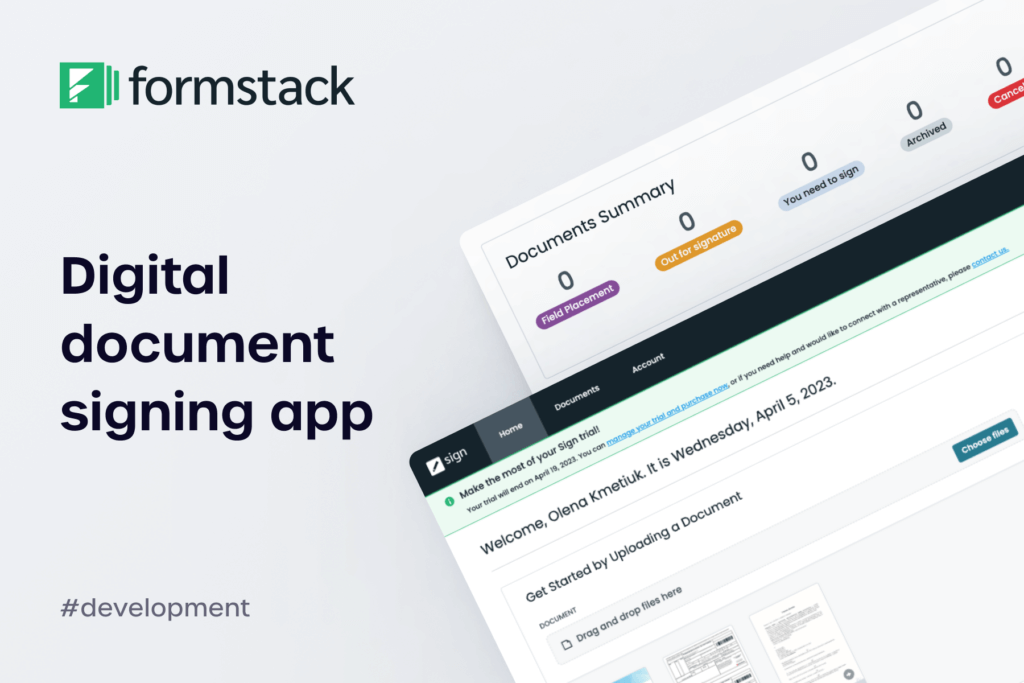
Two hours sounds thin. In practice it covers the daily standup, the demo and the escalation, and it has sustained multi-year engagements. Fingoweb ran a team of around ten developers in Kraków for the US software company Formstack, rewriting its eSignature product from Angular to React module by module while the application stayed live for paying customers, along with other projects. The shape answers the overlap question: two hours of overlap is enough when the process is written down, and eight hours is not enough when it isn't.
This tracks what Deloitte found in its Global Outsourcing Survey of more than 500 executives: access to skilled talent and agility now sit alongside cost as the reasons companies outsource at all, with 80% planning to hold or increase their spend.
The case for Poland as a nearshore software development destination
With the map settled, the Poland-specific question is what the country offers beyond convenient placement on a flight map. Four things decide it, and one of them is a genuine weakness that the vendor pages tend to skip.
Talent depth, and the caveat the European Commission flags
Poland has the largest engineering workforce in Central and Eastern Europe and exported roughly $19.6 billion of ICT services in 2024, selling mostly into Germany, the United States, Austria and the UK. For scale, Eurostat puts Germany at 22.2% of all EU ICT specialists, France at 13.7% and Spain at 10.2%, with Poland the biggest contributor from the eastern half of the union.
Set that against Brussels' own assessment. The European Commission's 2026 Digital Decade country report describes Poland's pool of ICT specialists as stagnating, at 4.5% of national employment against an EU average of 5.0% and a Polish 2030 target of 6%. Supply is not expanding fast enough to keep pace with demand, senior availability is tightening, and rates climbed 12 to 22 percent over two years. The cost advantage against Western Europe is real and it is narrowing. Anyone selling you Poland as an endless reservoir of cheap seniors is describing 2016.

EU membership: GDPR, contracts, and IP in one jurisdiction
Almost nobody on the first page of Google mentions this factor, and for a large class of buyers it outranks the hourly rate.
Poland is in the EU, so personal data processed by your development team never leaves the European Economic Area. No standard contractual clauses, no transfer impact assessment, no dependence on an adequacy decision that a court might strike down eighteen months from now. Contracts run under EU-harmonised law, IP assignment works the way a European legal team expects it to, and the subprocessor chain stays inside one regulatory perimeter and one audit regime.
American buyers should not skip this section. If you sell into Europe, your customers' data protection obligations become your procurement questionnaire, and an EU-based development partner removes an entire annex from it. A team in Manila or Bogotá does not.
Nearshore software development rates in Poland
Nearshore software development rates in Poland sit between Western Europe and the cheaper offshore markets, closer to the Latin American band than most buyers expect.
| Role | Poland | Latin America | Western Europe | US onshore |
|---|---|---|---|---|
| Mid-level developer | $30–50/hr | $35–55/hr | $70–110/hr | $80–130/hr |
| Senior developer | $50–70/hr | $50–90/hr | $90–130/hr | $100–200+/hr |
| QA engineer | $30–50/hr | $30–45/hr | $60–90/hr | $70–110/hr |
| DevOps engineer | $50–75/hr | $45–75/hr | $85–125/hr | $100–160/hr |
Two things to hold in mind when you compare quotes. First, the hourly rate is only about 65 to 75 percent of the total cost, once you count onboarding time, your own management overhead, tooling licences and the hours your people spend in coordination. Second, rates vary more by vendor than by country, so a cheap quote from an expensive country and an expensive quote from a cheap one are both common.
Fingoweb's own body leasing rates for software development in Poland run $25–60 per hour depending on seniority and stack, below the market band above. The same team model supports longer arrangements: we build and maintain software for IMS, whose screen network runs across shopping centres throughout Poland, including the CMS and programmatic advertising integration with BroadSign that keeps that network selling inventory.
Cases where Poland is the wrong choice
A partner who cannot tell you when to go elsewhere is running a sales process. Poland is the wrong answer in four situations, all of them easy to spot before you waste anyone's quarter.
Skip Poland if your engineering leadership sits on the US West Coast and you need real-time collaboration rather than a documented handoff, because one hour of natural overlap will grind on people within a few months. Skip it if your budget genuinely requires sub-$25 hourly rates, which South and Southeast Asia can meet and Poland cannot. Skip it if you need to add fifty or two hundred engineers within a quarter, since Polish vendors are mid-sized and the Commission's stagnation warning bites hardest at that volume. And skip it for high-volume, low-complexity maintenance work with a stable specification, where the daily-collaboration premium you are paying for buys you nothing.
Choosing a nearshore software development partner
Choosing the country is the easy half. Nearshore engagements that go wrong almost never fail because of geography; they fail because of who was staffed, what the contract allowed, and how the first two months were run.
Evaluation criteria that predict delivery quality
Put these to every nearshore software development company on your shortlist in the first two calls, before anyone sends a proposal.
- Name the actual people. Ask for a CV, a GitHub profile, and a call with the person who will write the code. Sales engineers who vanish after signing are the single most common complaint in this market.
- Employees or subcontractors. A vendor who subcontracts half the team has less control over retention than you do.
- Attrition rate over the last two years. Expect a specific number.
- Reference calls with clients in your time zone. A German reference tells you nothing about how they handle a US East Coast schedule.
- Code ownership and repository access from week one. If the code lives on their infrastructure until final payment, you have a hostage situation with a nicer name.
- A worked example of a scope change. Ask what they did last time a client changed direction mid-sprint, and how the invoice reflected it.
- Something they turned down. A vendor who has never said no to a client says yes to things they cannot deliver.
Understanding how a software house is structured internally makes these answers much easier to interpret.

Contract, IP, and data terms worth negotiating
- IP assignment triggered by payment – ties ownership to invoices you have already settled rather than to a completion date somebody has to declare.
- Repository access from week one, with the account registered to your organisation.
- A data processing agreement with a named subprocessor list – and a notification obligation before that list changes.
- Team continuity clause – naming the individuals, with a notice period before anyone is rotated off and a paid handover overlap.
- Rate review cadence – annual, capped, and written down. Polish rates are rising; agree the mechanism now.
- Exit and handover obligations – documentation, credential transfer, and a defined number of transition hours, priced in advance.
Common failure modes in nearshore projects
Four patterns account for most of the damage. Bench swapping comes first: the team that pitched is not the team that ships, and you discover this in week three. The contract clause above is the only defence, because good intentions do not survive a vendor's other client escalating.
Second, async drift. Teams with limited overlap start batching questions into a daily email, and a decision that would take four minutes on a call takes two days. Fix it by protecting the overlap window as meeting time and writing decisions down where both sides can find them. Third, the vendor who never pushes back, which feels pleasant for a quarter and produces a codebase full of things nobody thought through. Fourth, knowledge concentrating in one person, which turns their resignation into your outage. Rotate pairs deliberately and demand written architecture decisions. The broader trade-offs that come with outsourcing development apply to every model here, nearshore included.
The first 90 days of a nearshore engagement
Assembling a team is quick. Most nearshore software development services commit to two to four weeks for a small team, and Fingoweb staffs most engagements in under two. Getting that team productive is the slower part, and the gap between doing it deliberately and improvising is enormous: with a structured 30-60-90 onboarding, developers typically reach full independent sprint contribution around week eight, and without one the same ramp takes four to six months.
- Weeks 1–2 – environment access, credentials, and one small throwaway task shipped to production. If nobody has merged a pull request by day ten, escalate.
- Weeks 3–4 – the first real increment on staging, plus a named counterpart on each side who owns the relationship.
- Month 2 – establish the velocity baseline you will measure everything against, and run the first retrospective with both sides in the same call.
- Month 3 – an honest review against that baseline, with a documented exit ramp if the answer is no.
If you are three months in and cannot say whether the engagement is working, your measurement has failed before the vendor has. Fingoweb runs this sequence out of Kraków, in the same time zone as Berlin and one hour from London, and you can talk to us about the team you need.

FAQ - Nearshore software development
Common questions about nearshore software development, taken from the queries buyers run before they shortlist a vendor.
What is nearshore software development?
Nearshore software development means hiring an engineering team in a nearby country, usually one to three time zones from your office and within a short flight. The model exists to preserve daily collaboration and easy travel while paying less than domestic rates. A useful practical test: if you can fly out, spend a working day with the team and be home that night, it is nearshore.
What is the difference between nearshore and offshore software development?
Distance and working hours. Nearshore teams share most of your business day and can be visited without a long-haul flight; offshore teams are typically six to twelve time zones away with little or no natural overlap. Offshore is cheaper per hour by roughly 30 to 50 percent, and the saving is offset when your work requires frequent unplanned conversation rather than well-specified batches.
How much does nearshore software development cost?
Rates depend on region, seniority and vendor. Typical 2026 bands:
- Poland and Central Europe – $40–60/hr mid-level, $55–75/hr senior
- Latin America – $35–55/hr mid-level, $50–90/hr senior
- Western Europe – $70–130/hr
- US onshore – $80–200+/hr
Add roughly 25 to 35 percent on top of any hourly figure for onboarding, management overhead and tooling. Compare the seniority mix as well as the rate, because a cheaper team weighted toward juniors usually costs more per shipped feature.
Is Poland nearshore or offshore for a US company?
Strictly, offshore: Poland sits six to nine hours from the United States, which is well outside the nearshore definition. In practice many US companies treat it as a nearshore-equivalent option because the two-hour East Coast overlap covers a standup and an escalation, and EU data residency solves a compliance problem that Latin America does not. For West Coast teams the offshore label is accurate and the model rarely holds.
Which European countries are best for nearshore software development?
Five markets take most of the volume, each with a different strength:
- Poland – the largest talent pool in the region, strongest for long-running product teams
- Romania – lower rates, deep in embedded and telecom work
- Czechia – smaller and pricier, strong engineering culture
- Portugal – best fit for UK and Iberian clients, growing fast
- Baltics – small teams, high seniority, fintech concentration
Pick on team availability in your stack rather than on the country average, because vendor variation inside each market is wider than the gaps between them.
When is nearshore outsourcing the better choice?
Nearshore wins when the work is exploratory enough that requirements change during the sprint, when your product team needs answers within the working day, and when regulated data makes jurisdiction a procurement issue. Offshore wins on well-specified, high-volume work where the cost gap is worth the coordination lag. Onshore wins when the work must happen on your premises or under a clearance you cannot extend to a foreign supplier.