













Seven in ten employers worldwide cannot find the skilled people they need – 72%, according to ManpowerGroup’s 2026 Global Talent Shortage survey of 39,000 companies in 41 countries, nearly double the share from a decade ago. The same survey marks a first: AI skills now top the list of hardest-to-find capabilities, ahead of traditional IT roles. The gap is set to widen too, since Korn Ferry projects a global shortage of more than 85 million skilled workers by 2030, around $8.5 trillion in unrealized annual revenue, with technology among the hardest-hit sectors. Meanwhile the work does not wait. So engineering leaders reach for a faster lever than full-time hiring: IT staff augmentation companies that lend you vetted developers on demand.
The specialists join your team, work under your managers, and roll off when the project ships, with no recruitment cycle and no bench to carry. The tricky part is the shortlist. This market stretches from $200-an-hour freelancer marketplaces to enterprise firms with tens of thousands of engineers to lean European software houses, and picking the wrong type can cost you months. The best IT staff augmentation company for you comes down to one thing: how well its engagement model fits the gap you are filling. One honest note: this roundup is ours and Fingoweb opens it, so we spell out the criteria and typical rates for every entry and let you judge the call yourself. Below are eight of the strongest IT staff augmentation companies for 2026, what each does well, and a simple way to choose. If you already know you want an embedded team rather than a marketplace, Fingoweb’s dedicated development teams are built for exactly that.
IT staff augmentation: definition, models, and use cases
The label gets slapped on wildly different arrangements, so it pays to be precise before you compare vendors. One clear distinction does most of the work.
IT staff augmentation, defined
IT staff augmentation is a model where an outside provider supplies vetted engineers who join your in-house team and work under your direction, while the provider stays their legal employer. You set the tasks, tools, and priorities; they handle recruitment, payroll, and benefits. When the project wraps, you scale down without severance or idle salaries.
Think of it as renting skills by the sprint instead of buying them by the decade. The engineer sits in your stand-ups and your codebase, and answers to your tech lead like anyone else on the team.
Staff augmentation vs outsourcing vs managed services
Three arrangements, one recurring question: who runs the work? That single answer separates them.
| Model | Who runs the work | How you pay | Best when |
|---|---|---|---|
| Staff augmentation | You do | Per engineer, hourly or monthly | You have a plan and a team, just too few hands |
| Project outsourcing | The vendor | Per project or milestone | You want a finished outcome and can hand over the whole scope |
| Managed services | The vendor, ongoing | Retainer against an SLA | You want a whole function run for you long term |
Staff augmentation keeps you in the driver's seat – that is its main appeal, and also its main demand on your time, because the people management stays with you. If handing over the wheel sounds better, our guide to outsourcing pros and cons covers the project route in detail.
Situations that call for staff augmentation
Staff augmentation earns its keep in a handful of specific situations:
- A deadline in-house hiring can't hit – you need a senior engineer productive in two weeks, and a permanent hire is months away.
- A narrow skill for a fixed window – a Kubernetes specialist for a migration, a data engineer for one pipeline, then done.
- A team you want to flex – ramp up for a release and ramp down after, without hiring and firing.
- Niche or unfashionable tech – the people who still know your legacy stack are rare and worth borrowing.
- A product you are still validating – augmentation lets you build and ship before you commit to permanent headcount, which matters when the roadmap could pivot next quarter.


The best IT staff augmentation companies in 2026
We rated each IT staff augmentation company on what tends to predict a smooth engagement: how rigorously they vet engineers, the model they are built around, time-zone overlap with US teams, how openly they price, and how long their people stay. Fingoweb leads the list because it is our own team and the clearest fit for the embedded-team use case this guide keeps circling back to. After that, entries follow use case rather than a manufactured score. Rates are approximate and shift with seniority and location.
| Company | Model | Best for | Typical rate (USD/hr) |
|---|---|---|---|
| Fingoweb | European nearshore software house | Embedded product engineers on a budget | $25–60 |
| Toptal | Premium freelancer marketplace | Fast access to top-tier freelancers | $60–200+ |
| BairesDev | Large nearshore (LatAm) | Scaling fast with US-hours overlap | $50–99 |
| EPAM Systems | Enterprise engineering | Large-scale digital transformation | $50–100+ |
| Arc.dev | AI-matched freelance marketplace | Fast AI-assisted matching for remote roles | $60–150 |
| Andela | Global remote marketplace | Long-term remote hires, AI-fluent talent | $40–100 |
| X-Team | Embedded remote squads | Culture fit and long retention | $50–110 |
| TEKsystems | US IT staffing giant | Enterprise on-site and hybrid staffing | $60–130 |
1. Fingoweb
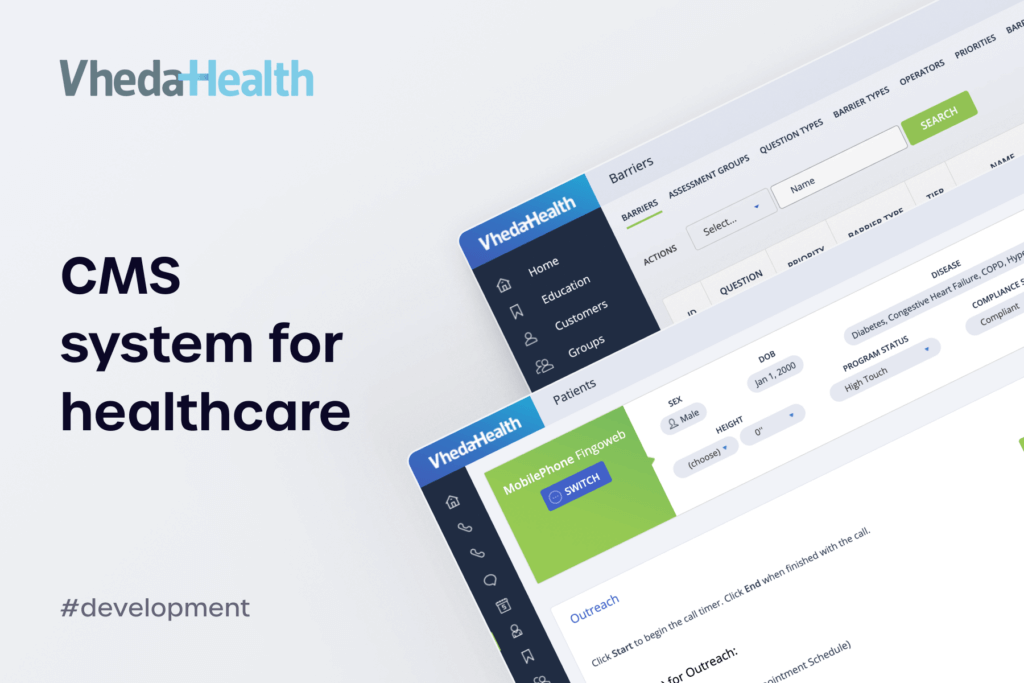
Start with the option we know from the inside. Fingoweb is a Kraków-based software house that has spent more than a decade building web and mobile products – over 100 remote projects for clients like VhedaHealth, Diagmatic, and Sellizer. Its staff augmentation service, marketed as dedicated development teams, hands you engineers who work in React, React Native, Node.js, PHP, and Laravel and embed directly in your team. What sets it apart from a marketplace: these are salaried product engineers who already ship together every day, so they bring team muscle memory to your project instead of meeting each other on it.
At $25–60 an hour it undercuts most US and Latin American providers, and its Central European time zone overlaps a full working morning with the US East Coast. It will not staff a 200-person program the way an enterprise vendor can, and it does not pretend to. For a mid-market team that wants a tight, senior unit, that focus is the point. If the model is new to you, our explainer on what a software house does walks through how the engagement runs.
2. Toptal
If speed and pedigree outrank price, Toptal is the benchmark everyone else gets measured against. The marketplace screens applicants hard, publicly claiming to accept only the top 3%, and fields developers, designers, and finance experts you can be interviewing within days. That vetting buys confidence and a bill to match: expect roughly $60 an hour for mid-level work and $200 or more for specialists, plus a monthly platform fee, which makes the top of this band the steepest rate on the list. The trade-off is structural. You are hiring vetted individuals, so a three-person Toptal "team" is three freelancers who may never have worked together. For a short, senior gap, few IT staff augmentation companies move faster.
3. BairesDev
With more than 4,000 engineers, BairesDev is one of the largest IT staff augmentation companies in Latin America, and its whole pitch is overlap. Its developers keep US business hours from nearshore time zones, so your Slack does not go quiet at 2pm. Rates land around $50–99 an hour, fair for the seniority on offer, and the company screens heavily before anyone reaches a client. Scale is the other side of the coin. Onboard two engineers and you are a small account inside a vast machine, so push for named people and a real trial before you sign.
4. EPAM Systems
EPAM plays a different game. A NYSE-listed engineering firm with tens of thousands of specialists worldwide, its IT staff augmentation services target the kind of multi-year, multi-team digital transformation that would swamp a boutique. Banks, insurers, and Fortune 500 platforms are its natural habitat, and it brings the delivery process, security, and compliance to match. All that structure carries overhead in both price and pace, so EPAM rarely fits a two-engineer top-up. When the program is large, regulated, and cannot fail quietly, it is a safe pair of hands.
5. Arc.dev
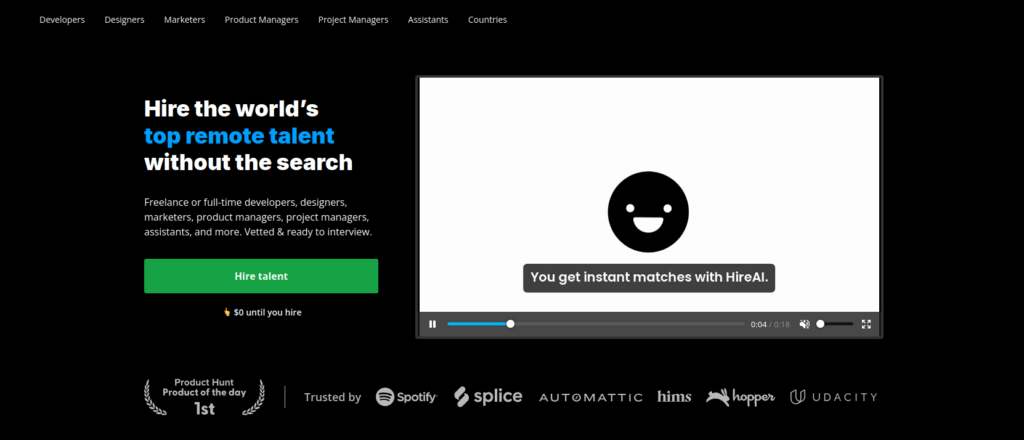
Arc.dev is the matching engine of this list. Its HireAI tool screens a vetted pool of remote freelancers spanning 190 countries against your job spec, and the company claims it cuts time-to-hire by around 75% compared with a manual search. Expect roughly $60–150 an hour depending on seniority and location. The model resembles Toptal's – you hire vetted individuals, so team chemistry stays your job – at rates that start lower and reach across more geographies. For a fast, well-scoped freelance hire on a tighter budget, Arc.dev is a natural first stop.
6. Andela
Andela made its name connecting companies with strong engineers from regions the traditional talent hunt overlooked, starting in Africa and now spanning global markets. Founded in 2014 and backed to unicorn status, it is built for long-term remote hires rather than quick contract flings, and its talent pools are among the most geographically diverse you will find. The company has also leaned into AI, with its Talent Cloud platform drawing on engineers in more than 135 countries and an AI Academy training thousands of them in applied AI skills. That breadth has a cost: candidates can sit many time zones from your office, so pin down working-hours overlap early. For a company building a durable distributed team, Andela's reach is hard to match.
7. X-Team

X-Team has been fully remote since 2006, long before a pandemic made it ordinary. It specializes in embedding motivated developers and ready-made squads into your team for the long haul, and it puts real effort into retention and developer community, which is why its people tend to stay on projects for years rather than months. Expect premium remote rates, roughly $50–110 an hour. If you want engineers who treat your product like their own and stick around, that continuity is the draw.
8. TEKsystems
TEKsystems is the incumbent. Part of Allegis Group and running since the 1980s, it is one of the biggest IT staffing firms in North America, placing tens of thousands of contractors a year across enterprise clients. Its strength is reach and traditional staffing muscle: on-site and hybrid roles, US coverage, and the process maturity a Fortune 500 procurement team expects. It is a staffing engine at scale first and a product-minded engineering partner second, with enterprise pricing to match, roughly $60–130 an hour. When you need many vetted contractors on the ground in the US, few names carry the same bench.
Choosing the right IT staff augmentation company
Eight strong names still leave you with a decision. Two questions cut through most of it: whether the model fits your gap, and whether this particular IT staff augmentation company can prove it delivers.
Match the model to your situation
Start with the shape of the work, before you look at any logos. Need one senior specialist for ten weeks? A marketplace like Toptal or Arc.dev gets you there fastest. Building a durable product team on a budget, with real time-zone overlap? A nearshore software house like Fingoweb, or a Latin American firm like BairesDev, fits better. Running a sprawling, regulated program? An enterprise vendor earns its overhead. Most hiring mistakes we see trace back to a mismatch right here: a company paying enterprise rates for a job a five-person boutique would have owned, or dropping a lone marketplace freelancer into a role that needed a settled team. Match the model first, and the shortlist picks itself.
Due diligence before you sign
Once the model is right, vet the company like you would a full-time hire. The checklist that predicts outcomes is short:
- Relevant track record – case studies and references on work like yours carry more weight than a wall of client logos.
- IP and NDA in writing – confirm your code and your ideas are yours before anyone starts.
- Security and compliance – ISO 27001, GDPR, SOC 2 where it applies; ask for the certificates themselves.
- Time-zone and communication fit – agreed overlap hours and a clear cadence beat a vague promise to stay in touch.
- A trial and a clean exit – a paid pilot and sane notice terms tell you how confident a provider is.
None of this is exotic. It is the same discipline you would apply to any vendor, and our guide to choosing a development agency digs into the questions worth asking on a first call.

FAQ - IT staff augmentation companies
What is IT staff augmentation?
IT staff augmentation is a way to hire external engineers who work inside your team, under your management, while a provider stays their employer and carries the recruitment, payroll, and HR load. You keep control of the work and the code; they absorb the hiring risk. It sits between a full-time hire and handing an entire project to an outside vendor.
How much do IT staff augmentation companies charge?
Most IT staff augmentation services bill by the hour, and rates swing widely by region and seniority. Rough bands in 2026:
- Premium marketplaces (US-led): $60–200+, depending on seniority
- US enterprise staffing: $60–130
- Nearshore Latin America: $50–100
- European nearshore software houses: $25–60
Location moves the number nearly as much as skill does, which is why nearshore and European providers win on value for a lot of roles.
What is the difference between staff augmentation and outsourcing?
Control is the difference. With staff augmentation you manage the engineers day to day as part of your team; with project outsourcing you hand the vendor a scope and they deliver the result their own way. Augmentation fits when you have a plan and need hands. Outsourcing fits when you want an outcome and are happy to delegate how it gets built.
How quickly can augmented developers start?
Faster than hiring, as a rule. Marketplaces with pre-vetted pools can put candidates in front of you within days; a software house assembling a dedicated team usually takes one to three weeks to line up the right people and onboard them. Either way you skip the two-to-four-month cycle a permanent hire tends to demand.
Is nearshore or offshore IT staff augmentation better?
It depends on how much real-time collaboration you need.
- Nearshore (Latin America for US clients, or Central Europe) overlaps most of your workday, so stand-ups and pair programming happen live, at mid-range rates.
- Offshore (South and Southeast Asia) is usually the cheapest, with a wider time gap that suits well-specified, asynchronous work.
For tight collaboration, nearshore IT staff augmentation is the safer default. For cost-led, well-defined tasks, offshore can come out ahead.