














Healthcare data breaches cost an average of $6.64 million in 2026, making healthcare the costliest industry to breach for the 13th consecutive year according to IBM’s Cost of a Data Breach Report. Financial services came second at $6.29 million, while the global cross-industry average sat at $4.99 million. Those numbers explain why healthcare software development cost sits so far above the price of an internal booking tool with a similar feature list.
Healthcare software development cost is the question every clinic, telemedicine provider and digital health founder asks first, and the honest answer starts with a range wide enough to be useless: roughly $40,000 to $600,000. The distance between those two ends comes down to compliance scope, the number of systems you connect to, and how much of the product ships in release one. Two things drive your quote above everything else: how many regulated jurisdictions you operate in, and how many external systems your software has to talk to. We have been building custom healthcare software development projects for clinics, diagnostics providers and US health companies for over a decade, so the numbers below come from quoting this work as much as from published market data.
Healthcare software development cost benchmarks for 2026
Two tables carry most of the useful information. The first sets expectations by product type, the second by who does the work. Treat both as opening positions rather than final answers, because the drivers in the next section can push a project from one row to another.
Healthcare software development cost by product type
What each product type costs in 2026: a patient portal typically runs $40,000 to $200,000, a telemedicine platform $60,000 to $300,000, and a custom EMR or EHR system $75,000 to $500,000. The spread inside each band comes from compliance scope, the number of external systems involved, and whether the first release is a narrow MVP or a full product.
| Product type | Typical 2026 range | What sits at the top of the range |
|---|---|---|
| Patient portal | $40,000 – $200,000 | Full EHR sync, document workflows, multi-role access |
| Telemedicine platform | $60,000 – $300,000 | Native video, e-prescribing, insurance eligibility checks |
| Remote patient monitoring | $80,000 – $350,000 | Many connected devices, alerting rules, clinician dashboards |
| Custom EMR / EHR | $75,000 – $500,000 | Billing, lab interfaces, interoperability certification |
| Diagnostics platform | $100,000 – $400,000 | Scoring algorithms, longitudinal comparison, reporting engine |
| Hospital management system | $150,000 – $600,000+ | Department-wide scope, legacy migration, on-premise install |
These bands reflect published vendor pricing guides and our own estimates for comparable scope. Nobody quotes off a table, though. An estimate becomes real once someone lists the integrations and the jurisdictions.
Hourly rates by delivery region
Where the team sits changes the bill by a factor of five or more for identical work. Local salary levels account for most of that gap, which is why nearshore delivery from Poland has become a standard answer for US health companies watching their burn rate.
| Delivery model | Hourly rate | Notes |
|---|---|---|
| US enterprise consultancy | $250 – $350 | Large firms, heavy process overhead |
| US agency | $100 – $180 | Same time zone, deepest HIPAA familiarity |
| Western Europe | $80 – $150 | Strong GDPR grounding, EU contracting |
| Poland / CEE nearshore | $25 – $60 | Our own band; 2–6 hours of US overlap |
| Asia offshore | $25 – $50 | Lowest rate, largest coordination cost |
Healthcare work also carries a premium over ordinary business software at any rate level. Audit logging, encryption at rest and in transit, two-factor authentication, role-based access and data retention rules are not features anyone demos, yet they consume real sprint capacity. Published estimates put the compliance overhead at 15% to 25% of build cost, and that matches what we see. Wiring an office and wiring an operating room use the same copper; the inspection regime is what differs.

The biggest healthcare software development cost drivers
Three variables explain most of the gap between a $60,000 quote and a $250,000 one for what sounds like the same product. Buyers routinely underestimate the first two, compliance and integrations, while vendors routinely oversell the third. Working through all three in order is the fastest way to turn a healthcare software development cost range into a number you can defend in a board meeting.
Compliance scope: HIPAA, GDPR, or both
Almost every cost guide on this topic prices HIPAA and stops. That leaves out every European buyer, since a clinic in Warsaw or Lisbon answers to GDPR instead, and it leaves out any US digital health company treating patients in the EU, which answers to both.
HIPAA work concentrates on the Security Rule safeguards codified in 45 CFR Part 164: access controls, audit controls, integrity checks, transmission security, plus the administrative and physical layers around them. Budget for a risk analysis, signed business associate agreements, and an audit trail that survives inspection. GDPR pushes in a different direction. Article 32 demands security appropriate to the risk, and the surrounding regulation adds data minimization, lawful basis, subject access requests, erasure, breach notification inside 72 hours, and records of processing. We design around GDPR by default, with encryption, two-factor authentication and an on-premise deployment option for organizations that will not put patient records in a shared cloud.
Serving both regimes rarely doubles the compliance budget, because the technical controls overlap heavily. The documentation and process work does grow:
- Two legal reviews instead of one – separate counsel for the US and EU sides, each reviewing the same architecture against different tests.
- Data residency decisions – EU patient data may need to stay in the EU, which can mean a second deployment region and duplicated infrastructure cost rather than a code change.
- Subject rights tooling – GDPR erasure and portability requests need an actual mechanism. Building export and deletion flows properly, including anonymization of records you are legally required to retain, is a multi-sprint job that HIPAA-only projects skip entirely.
- Consent management – granular, revocable, logged.
Integrations, priced one connection at a time
A basic EHR connection over an API sits around $10,000 to $30,000, and that figure is where most estimates quietly go wrong, because it gets quoted as if "integrations" were one line item. Supporting several EHR systems with real interoperability, following the HL7 FHIR standards, runs $50,000 to $150,000 and occasionally beyond.
Connected medical devices are the line item nobody prices honestly, and the single biggest reason a healthcare app development cost estimate slips. Each device type is its own integration: pairing over Bluetooth Low Energy, parsing a vendor-specific data format, processing readings on the phone, encrypting them, assigning them to the right patient account, and keeping the app alive in the background so measurements arrive without the patient opening anything. Then each one has to be tested against the physical hardware. Eight device types means running that whole cycle eight separate times.
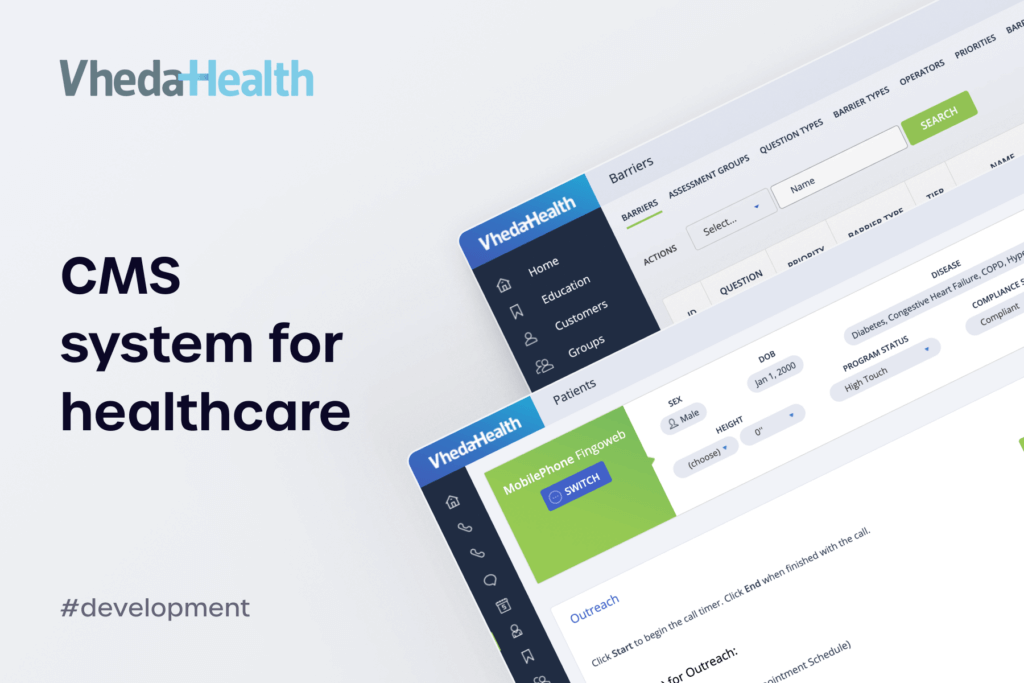
Our own work gives a sense of the spread. The Vheda Health platform we have been developing since 2014 consists of a backend API plus a web application for clinicians, and connects four device categories: glucose meter, pulse oximeter, blood pressure monitor and thermometer. The platform reports enabling patients to save more than 80% of medical costs by catching problems early enough to avoid hospitalization, which is the number that justifies the integration spend in the first place. On the mobile side we built a patient-facing app for a US healthcare provider with over 40 features and eight integrated medical devices, streaming weight, pulse, blood pressure and glucose readings over BLE. Same domain, integration bills an order of magnitude apart.
The added cost of AI features
Cost guides tend to write "AI/ML: $80,000 to $500,000" and move on, which tells a buyer nothing. Three specific builds show where the variance sits.
Semantic search over medical documentation is the cheapest of the three. A retrieval setup with vector databases lets a clinician ask for patient results with similar symptoms in plain language, and most of the work is data preparation rather than modeling. A consultation assistant costs more: recording, transcription, analysis, then writing structured patient fields back into the record, with a review step because nobody ships unreviewed clinical text. Video-based posture recognition is the expensive end. Detecting body keypoints from a phone camera, measuring angles between them and analyzing movement trajectories to flag abnormalities, monitor rehabilitation or detect falls means model work, tuning against real footage, and a long QA tail.
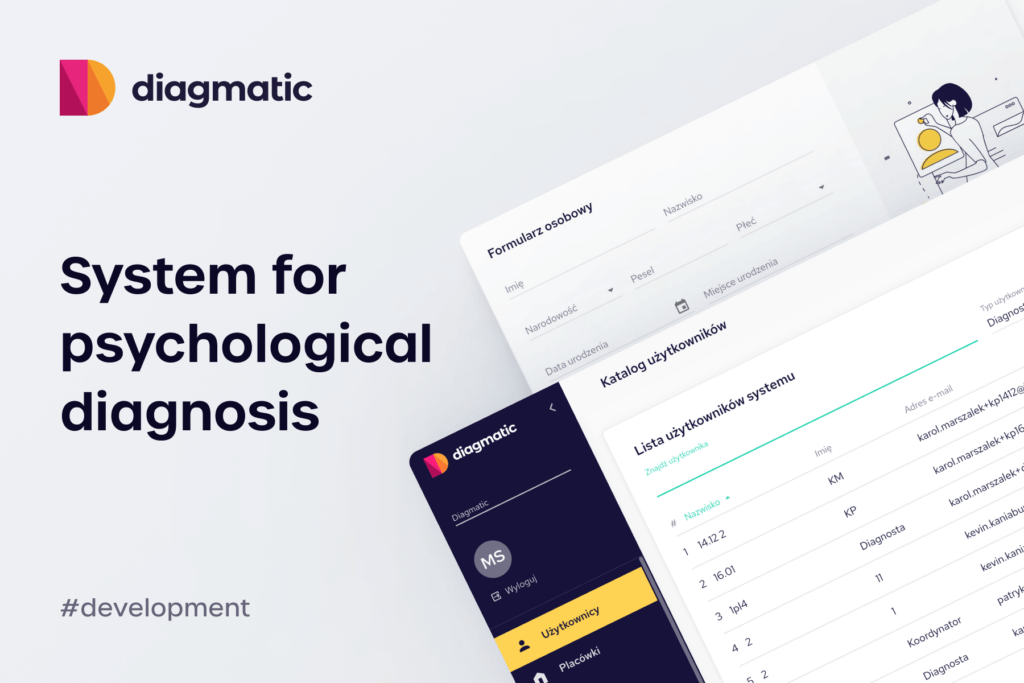
Domain logic can outweigh all of it. In the Diagmatic diagnostic system we built for psychological and pedagogical assessment of children, the visible product is three panels: a backoffice holding the psychometric models, a diagnostician panel for results, and a patient panel for taking tests. The expensive part was implementing mathematical models developed by psychometry experts as computational algorithms that return valid scores in real time. When a healthcare product depends on specialist math, the algorithms cost more than the interface.
Pre-development spend: analysis, mockups and proof of concept
The phase before development gets one line in most cost guides, and it is the phase that decides whether the estimate holds. Spending here feels like paying for paperwork. Treat it as the cheapest insurance available against a scope surprise in month four, and as the stage where a healthcare software development cost range narrows into a figure before you sign anything.
Needs analysis and functional mockups
Analysis starts with a business analyst, backed by developers, designers and marketers so each part of the delivery gets covered. The output is a written specification of needs, assumptions and goals. Worth knowing: that document stays your property even if you never build with us, which makes it a low-risk way to obtain a defensible number before committing to a vendor. Our guide to planning and budgeting a software project goes deeper on how to structure that stage.
Mockups follow. Designers produce a one-to-one render of the finished system, and we prepare up to three visual styles adapted to desktop, phone and tablet. Correcting a wrong clinical flow on a mockup costs hours. Correcting it after the API is built costs weeks.
Proof of concept for unproven features
For genuinely new ideas, a preliminary build establishes whether the concept works before the full budget is committed. Pose recognition, an AI triage step, a novel device integration: all are cheaper to test in two weeks than to discover halfway through delivery. A proof of concept that fails has saved you money.


Engagement models and their effect on healthcare software development cost
How you buy the work moves the number as much as what you buy, so the commercial model belongs in any serious healthcare software development cost discussion. Two of them cover almost all projects in this sector, and both come with an ongoing cost that first-year budgets routinely forget.
Fixed price against time and material
Fixed price sets the budget, scope and schedule up front, and suits projects with well-defined requirements. Time and material bills actual hours and lets you shift scope and priorities as clinical feedback arrives. We work with both, and offer fixed price with a guarantee where requirements support it.
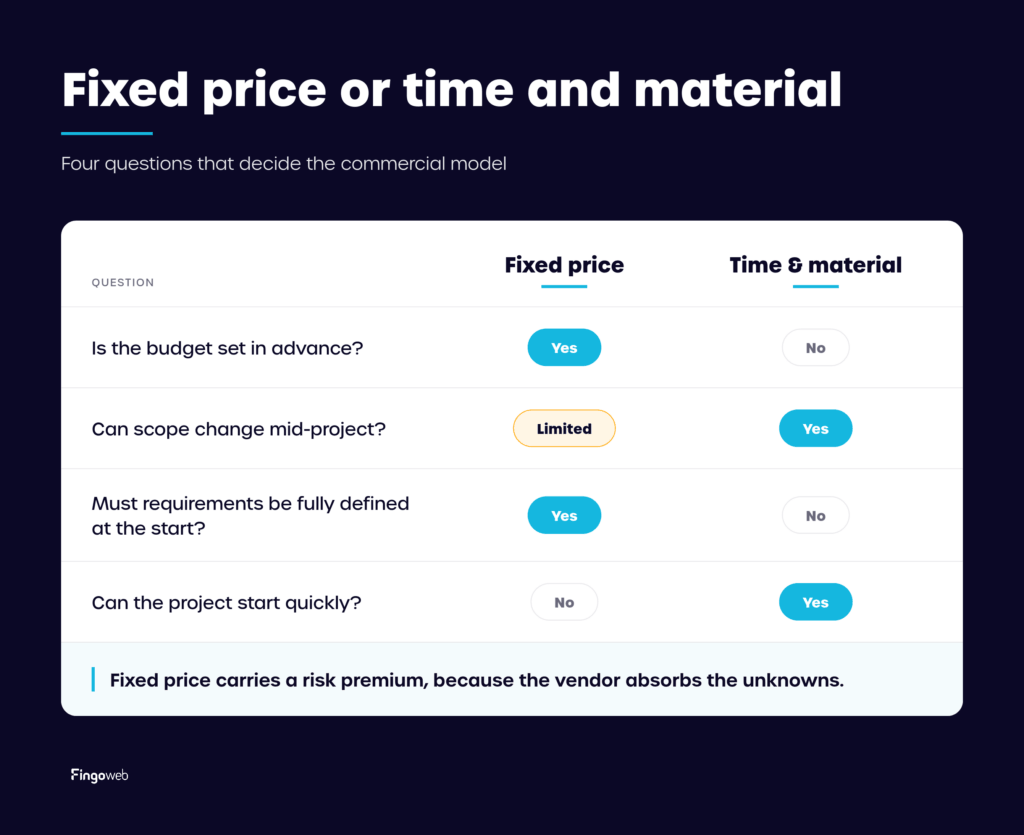
Fixed price carries a risk premium, since the vendor absorbs the unknowns. For a first healthcare release with regulatory questions still open, that premium is often larger than the overrun it protects against. A dedicated development team billed on time and material tends to be the cheaper route, provided you accept the reporting discipline that goes with it: progress demos roughly every two weeks and weekly meetings.
Maintenance, infrastructure and the SLA
Almost every healthcare software development cost estimate you receive covers the build and stops there. Plan on 15% to 20% of build cost annually for maintenance. On a $200,000 platform that is $30,000 to $40,000 a year, and it buys considerably more than bug fixes.
Our infrastructure work covers anti-DDoS protection, automated fault detection, 99.99% availability in a 24/7 regime, and a disaster recovery plan that restores the system inside 48 hours even if a data center burns down. Dependency updates run on a four-month cycle so the codebase never drifts into legacy territory, and server configuration gets reviewed for cost as usage patterns change. An optional SLA adds guaranteed response times.
Three ways to lower your healthcare software development cost
Cutting a healthcare software development cost without gutting the product comes down to sequencing and reuse.
- Ship a narrow first release. Pick the one clinical workflow that proves the model, build that properly, and add the rest once real users have shaped the backlog. In our experience a large share of the features in a first specification never get used.
- Use one cross-platform codebase. Cross-platform mobile app development with React Native delivers iOS and Android in parallel from a single codebase, which shortens delivery and cuts long-term maintenance against two native teams.
- Buy the commodity, build the differentiator. Nobody needs a custom calendar widget or a custom video codec. The scoring algorithm, the device pipeline, the clinical decision path: build those.
FAQ - healthcare software development cost
The questions below come up on almost every first call about a healthcare build. Every figure in the answers is a market range, so treat them as a starting point for a conversation with a vendor.
How much does healthcare software development cost?
Healthcare software development cost runs between roughly $40,000 and $600,000 for a first production release, depending on product type. Patient portals sit at the low end, hospital management systems at the high end. Hourly rates range from $25 to $60 for nearshore teams up to $250 to $350 for US enterprise consultancies, and compliance work adds 15% to 25% on top of comparable non-healthcare scope. Add another 15% to 20% of the build figure for the first year of running it.
How much does it cost to build a HIPAA compliant app?
Compliance is a share of the project rather than a separate purchase, typically 15% to 25% of build cost. What that covers:
- Risk analysis and documented safeguards under 45 CFR Part 164
- Access controls, audit logging and transmission security
- Business associate agreements with every subprocessor
- Retention, backup and breach-response procedures
Expect the documentation and review effort to continue after launch, since a HIPAA program needs maintaining rather than finishing.
How much does telemedicine app development cost?
A telemedicine platform generally runs $60,000 to $300,000, which puts it in the mid band of healthcare app development cost estimates. Video consultation, scheduling, patient records and secure messaging form the base. Costs climb with e-prescribing, insurance eligibility checks, and support for several EHR systems, since each connection is separately built and tested.
Does GDPR compliance cost more than HIPAA?
Neither is reliably more expensive; they load different parts of the project. HIPAA weight falls on safeguards, audit trails and business associate agreements. GDPR weight falls on lawful basis, data minimization, 72-hour breach notification and tooling for subject rights. Erasure and portability mechanisms in particular are engineering work that HIPAA-only projects never build, which is why teams new to the EU market underestimate it.
Is offshore or nearshore healthcare software development cheaper?
Offshore rates run slightly lower, at $25 to $50 against $25 to $60 for Poland and Central Europe, but the rate is rarely the deciding factor in healthcare. Two things move total cost more:
- Working-hours overlap – 2 to 6 shared hours with US teams versus almost none makes clinical review cycles days shorter.
- Regulatory familiarity – teams that have delivered under GDPR and HIPAA before do not bill you for learning either one.
For an EU-based product the calculation is simpler still, since a European supplier is already inside the same data-protection regime.