













A fresh wave of survey data from Vistar Media and Advertiser Perceptions tells the story plainly: U.S. marketers who already buy programmatic DOOH advertising expect to increase their spend by 49% over the next 18 months, a sharp acceleration from the 30% growth they forecast a year earlier. Behind that single number sits a category that has finished its experimental phase and started behaving like real media – brands moving budget out of trial line items and into the same data-driven workflows they already use for online display, CTV, and audio.
For media integrators, that shift is more than a sales talking point. It changes the technical bar a digital signage network has to clear if you want it to attract advertising revenue, plug into ad exchanges, and report back the way buyers now expect. DOOH advertising is no longer a side feature of digital signage – it is an ad-tech platform that happens to live on screens, and the software stack underneath it has to behave accordingly. This guide walks through what DOOH is, how the programmatic supply chain delivers a single impression onto a roadside billboard or mall totem, what the formats and metrics look like in practice, and what an integrator needs to think about when scoping or building a custom DOOH-ready CMS.
What is DOOH advertising?
Before we get into how the programmatic stack moves an ad onto a screen, it helps to fix the term itself. The acronym shows up in budget lines, RFPs, and vendor decks under different definitions, and the differences between DOOH, traditional OOH, and broader signage deployments determine which technology specs matter when scoping a build. This section lays out what DOOH advertising is, how it differs from traditional outdoor, and the formats integrators see most often in scoping calls.
DOOH advertising definition
DOOH advertising (digital out-of-home advertising) is paid advertising delivered on internet-connected screens placed in public or semi-public spaces – roadside billboards, transit stations, retail venues, gyms, restaurants, elevators. A DOOH ad is scheduled either by direct deal or programmatic auction, served through a CMS to a media player on the screen, and measured against audience exposure rather than individual clicks.
The category sits between two older worlds. Traditional out-of-home is print and static – billboards, posters, and transit panels printed and posted for weeks at a time. Online display is internet-only and personal – ads served to a single browser cookie or device ID. DOOH inherits the public, shared-screen nature of OOH and the data-driven infrastructure of digital. That hybrid is what makes the category interesting to advertisers and complicated to operate.
DOOH inventory ranges from a single screen above a barista to a national network spanning tens of thousands of displays. The economics, technical requirements, and buying mechanics shift across that range. A premium roadside billboard in Times Square is sold differently from a 30-second slot on a gym treadmill display, even though both are technically DOOH.
OOH vs DOOH advertising: the key differences
The line between OOH and DOOH advertising is more than just "screens vs. paper". A few practical differences shape every aspect of how the inventory is bought, sold, and measured:
- Creative flexibility – traditional OOH ships one printed creative for the campaign duration. DOOH can rotate dozens of creatives per day, swap them based on time of day or weather, and update them in minutes from a CMS dashboard.
- Buying motion – OOH is bought by the week or month against a fixed location. DOOH can be bought by the impression through a programmatic auction, the same way display media trades on RTB exchanges.
- Targeting granularity – OOH targeting stops at "this billboard reaches commuters on I-95". DOOH targeting can layer in mobile audience data, weather triggers, dwell-time signals, and contextual rules per play.
- Measurement model – OOH measurement leans on traffic counts and panel-based audience studies. DOOH measurement uses verified impressions, attribution panels, and footfall lift studies tied to mobile IDs near the screen.
- Reporting cadence – OOH reports come at the end of a campaign. DOOH dashboards refresh in near-real time, showing which creatives ran, on which screens, at what times, against which audiences.
Each of those differences raises the technical bar for the systems behind the screen. A DOOH-capable network combines an ad server, an audience data layer, and a delivery network into one stack.
DOOH advertising formats and placements
DOOH inventory is not one product. The category covers six distinct format groups, each with its own creative specs, audience profile, and buying logic. An integrator scoping a network needs to know which formats the planned screen mix will sell into, because the format determines almost everything else about the technology stack.
- Digital billboards – large outdoor displays on highways, in urban centres, and at high-traffic intersections. The classic format, often delivered as 14x48-foot LED bulletins with day-parted creative rotations.
- Transit and station screens – airports, subways, train stations, bus stops, and rideshare displays. Captive audiences with predictable dwell times, which makes them a favourite for longer-form storytelling.
- Retail and shopping mall screens – inside or outside stores, on shelves, in checkout zones, and at mall entrances. Often closest to a purchase decision, which lifts attribution metrics.
- Place-based and ambient screens – gyms, salons, bars, restaurants, healthcare waiting rooms, gas station pumps, elevator screens. Niche audiences with high contextual relevance.
- Contextual and dynamic placements – screens triggered by weather, sports scores, stock prices, traffic conditions, or local events. The creative changes based on a live data feed rather than a fixed schedule.
- Interactive and experiential screens – touch-enabled displays, AR-activated walls, QR-driven activations, and gesture-controlled storefronts. Less common but high-margin when the brand wants engagement metrics, not just reach.
The format mix dictates everything downstream – player hardware, network bandwidth, content scheduling logic, and the kind of programmatic deals the network can support. A network selling premium roadside DOOH and a network selling gym treadmill DOOH need entirely different software stacks under the hood.
How does DOOH advertising actually work?
The short answer: an ad gets onto a screen the same way an ad gets onto a website, just with more steps between buyer and pixel. The longer answer is where the category gets interesting for integrators, because the programmatic supply chain has to coordinate three separate technology layers – the buying side, the auction layer, and the delivery side – without any of them having direct visibility into the others. Understanding that supply chain is the difference between scoping a CMS that can plug into ad exchanges and one that can only handle direct sales.
From advertiser brief to a lit screen: the supply chain
A single DOOH impression travels through five distinct stages from the moment a media buyer briefs a campaign to the moment the creative lights up a screen:
- Campaign setup in a DSP – the advertiser or agency uses a demand-side platform (StackAdapt, Vistar, Basis, The Trade Desk) to define the campaign brief: budget, geography, audience, daypart, creative specs, and pacing rules.
- Inventory request to ad exchanges and SSPs – the DSP sends a bid request to the supply-side platforms (SSPs) that aggregate DOOH inventory. Major DOOH SSPs include Broadsign, Hivestack, Vistar's supply side, and VIOOH. The request includes the bid price, the targeting filters, and the creative file.
- Real-time auction at the SSP – the SSP runs an auction across competing DSP bids for each available impression slot on each screen in the network. The highest qualifying bid wins, similar to how RTB works in display advertising. The auction completes in tens of milliseconds.
- Winning creative is sent to the CMS – the CMS attached to the screen network receives the winning ad, the screen ID, and the play schedule. The CMS validates the creative, applies any local restrictions (content rules, dwell minimums), and queues it for the assigned screen.
- Player renders and verifies the play – the media player on the physical screen pulls the creative from the CMS, plays it at the scheduled moment, and sends back a verified play log. That log feeds the SSP and DSP for billing, reporting, and attribution.
The auction itself completes in milliseconds for live programmatic deals; in non-real-time programmatic and PMP buys, the auction runs minutes or hours ahead of the actual playout.


The programmatic auction layer: DSP, SSP, ad exchange
Three roles sit between the advertiser and the screen, each owning a specific part of the auction.
The demand-side platform (DSP) is the buying interface. Media planners log into a DSP to set up campaigns, upload creative, define audience and geography rules, and place bids on inventory. DOOH-specific DSPs handle the formats unique to the channel (vertical, ultra-wide, audio-off) and the targeting models (place categories, audience indices, weather triggers) that traditional online DSPs don't support out of the box. General-purpose programmatic DSPs have added DOOH modules to extend cross-channel buys.
The supply-side platform (SSP) is the seller's interface. Screen network owners (the media owners) connect their CMS to an SSP, which packages the available impression slots into bid requests, runs the auctions, and delivers winning ads back to the CMS for play. An SSP for DOOH carries extra responsibilities: validating creative against screen specs, enforcing content restrictions per location, and ensuring the play log audit trail is good enough for buyer billing.
The ad exchange is the auction marketplace where DSPs and SSPs meet. Some platforms operate combined SSP-and-exchange functions; others use independent exchanges to broker liquidity across multiple SSPs. For an integrator, the exchange layer is mostly invisible – what matters is which SSPs the CMS supports, since that determines which DSPs and demand pools the inventory reaches.
A useful data point on adoption pace: according to the Vistar and Advertiser Perceptions study reported by Street Fight, 91% of U.S. marketers buying programmatic DOOH have folded it into their wider digital activity, up from 41% in 2023. That kind of jump turns DSP integration from a nice-to-have into a hard prerequisite for any advertising-funded network.
The delivery layer: CMS, player, screen
The auction result is just bytes until it reaches the physical screen. Three components handle delivery.
The content management system (CMS) sits at the centre. It receives winning creatives from the SSP, validates them against local rules (banned categories, dwell minimums, fallback creatives), maintains the playlist for each screen, distributes content to the players, and collects play logs. For an advertising-funded network, the CMS is the single integration point – it talks upstream to the SSP and downstream to the players, and it has to do both cleanly under load.
The media player is the device attached to the screen. It downloads creatives from the CMS, plays them on the assigned schedule, monitors playback (frame drops, network outages, content errors), and reports back. Players have to handle rich media reliably, fall back gracefully if the network drops, and produce verifiable play logs the SSP can hand to buyers.
The screen is the output. Resolution, brightness, refresh rate, and orientation all affect what creatives can run on it. A 4K landscape billboard rotating 15-second video spots and a vertical totem rotating still images at 5-second intervals run entirely different content pipelines, even if the CMS is the same.
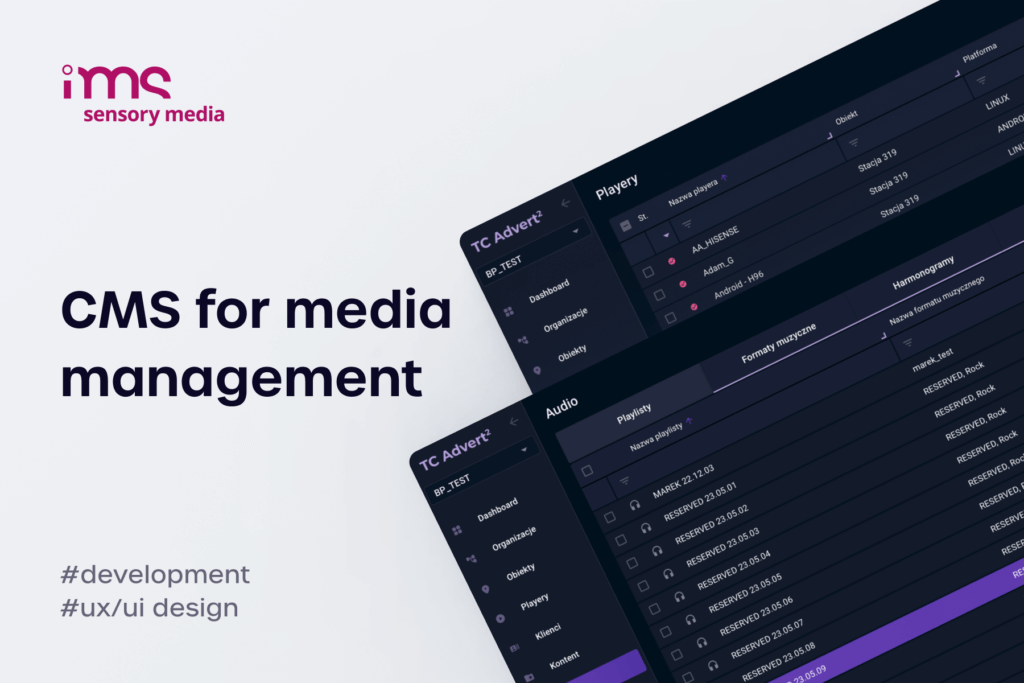
The Fingoweb Broadsign and IMS Sensory Media SSP integration case study is one example of how the layers connect in practice: a media-owner CMS plugged into an established DOOH SSP so the network could sell programmatic inventory through the buyers already operating on Broadsign. The integration work is mostly in the data plumbing – auction protocol handshakes, creative spec translation, play log formatting – which is the hidden 80% of building an ad-funded signage network.
Programmatic creative is where the layer is heading next. Rather than uploading pre-built creative variants, advertisers increasingly want creative that adapts at play time based on weather, audience, or context signals. That makes AI agents inside the modern signage CMS a real piece of the puzzle for advertising-funded networks: the creative pipeline has to know how to swap, render, and verify dynamic content fast enough to satisfy SSP timing rules.
Direct vs programmatic DOOH buying
| Dimension | Direct DOOH | Programmatic DOOH |
|---|---|---|
| Buying motion | Negotiated insertion order with the media owner | Auction or PMP deal through DSP and SSP |
| Pricing model | Fixed slot or weekly/monthly rate | CPM, dynamic bid per impression |
| Time to launch | Days to weeks – manual scheduling | Minutes to hours – automated through DSP |
| Targeting | Location and daypart only | Location, daypart, audience data, contextual triggers |
| Reporting | End-of-campaign report | Real-time dashboard with verified play logs |
| Best for | Premium one-off placements, high-control activations | Multi-network reach, agile budget shifts, data-driven targeting |
The two modes coexist on most modern networks. Premium and high-touch slots tend to stay direct; programmatic picks up scale and tail inventory. The interesting integration question for a network is not "direct or programmatic" but "how cleanly can the same CMS support both at once".
DOOH benefits, real campaign examples, and performance measurement
DOOH grew faster than the rest of the OOH category for a reason. The medium pairs the unique strengths of physical-world presence with digital control, and the data the format now produces means it can be planned, tuned, and measured against the same KPIs that brands use elsewhere in the media plan. The case studies below and the metrics that follow show what that combination looks like when it is executed well.
DOOH advantages over other ad channels
Five advantages keep DOOH at the top of media planner shortlists:
- Brand-safe, ad-blocker-immune environment – DOOH ads cannot be blocked, skipped, or muted. The screen is a public surface, which sidesteps the entire privacy and consent infrastructure that complicates digital media buying.
- Higher attention than scrolled formats – screens in public spaces capture sustained gaze rather than thumb-scrolled glimpses. Independent attention research shows DOOH delivers attention seconds well above mobile feed averages.
- Geographic and contextual precision – the ad runs at a specific place and a specific time, with creative that can shift based on weather, audience, or live data. That makes DOOH the only physical-world medium that can react to context within minutes.
- Cross-channel amplification – DOOH lifts mobile, search, and social performance. Brands routinely see search query and direct traffic spikes around DOOH activation windows when the campaigns are tracked together.
- Measurable footfall and lift – mobile ID panels around screens let advertisers measure store visits, app installs, and other downstream actions. The medium is no longer reach-only.
According to industry research published by the Out of Home Advertising Association of America, DOOH consistently outperforms broadcast and online display on a per-dollar basis for brand recall and purchase consideration. That economic pull is one of the reasons advertisers expect their pDOOH spend to rise so sharply over the next 18 months.
Three DOOH campaigns worth studying
Three recent activations show how brands are using DOOH in practice, and what kind of execution complexity the underlying technology has to support.
Spotify Wrapped DOOH is the textbook example of personalisation at network scale. Each year, Spotify ships thousands of unique creative variants generated from listener data and runs them through programmatic DOOH across major markets. The technical lift is on the creative pipeline, not the screen network – the CMS has to ingest, validate, and schedule a high volume of dynamic creatives without breaking the auction timing rules. The campaign works because the messaging is hyper-local and culturally specific, which lifts both attention and social amplification.
McDonald's contextual weather campaigns show what data-triggered creative looks like in production. McDonald's has run multiple campaigns where the DOOH creative shifts based on real-time weather: hot drinks when temperatures drop, ice-cold beverages when they rise, McFlurry promos on muggy afternoons. The trigger system typically runs at the DSP or CMS layer, which selects different creatives based on the live weather feed for the screen's location. The cost of getting it wrong (a hot-coffee ad in the middle of a heatwave) is high, so the integration between weather feed, decision logic, and creative validation has to be tight.
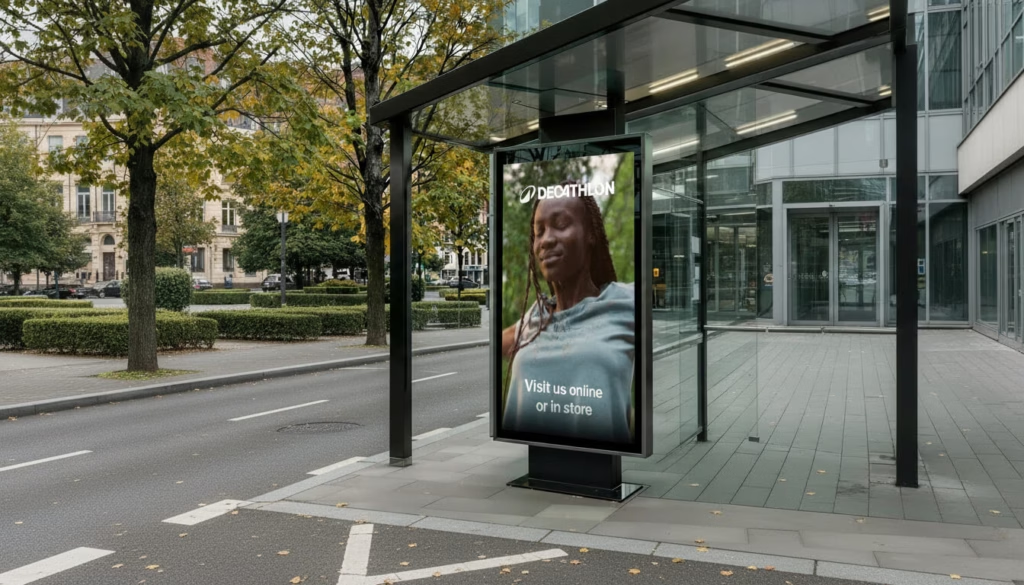
Decathlon's footfall lift activation is closer to a pure performance use case. The retailer ran DOOH placements near specific store catchments and measured mobile-ID footfall against unexposed control panels. The campaign produced a measurable lift in store visits among the exposed audience versus the control panel – a result that turned DOOH from a brand-only line item into a performance channel with proper attribution. The technology requirement here is on the measurement side: the SSP, the mobile-data partner, and the attribution panel all have to share device IDs cleanly enough to produce a defensible lift number.
DOOH performance metrics and attribution
Modern DOOH measurement is a stack of overlapping metrics, each addressing a different question in the brand's funnel:
- Verified impressions – the count of audience members who had a chance to see the ad, not just raw screen plays. Calculated from mobile data, panel-based estimation, and place-traffic models.
- Attention seconds – how long the average viewer's gaze stays on the ad. Sourced from camera-based studies and panel research, increasingly accepted as a planning metric.
- Ad recall lift – difference in unaided and aided brand recall between exposed and unexposed audiences, captured through panel surveys.
- Footfall lift – measurable increase in store, dealership, or location visits among audiences exposed to the campaign vs control. Powered by mobile-ID panels and geofence data.
- Search and direct lift – correlation between DOOH activation windows and brand search query volume or direct traffic.
- Cross-device extension – DOOH-exposed audiences retargeted on mobile, CTV, or display, with conversion attribution back to the original DOOH impression.
The measurement story is also where the limits show up. DOOH attribution is panel-based, which means smaller campaigns hit measurement floors before the data gets reliable, and the methodology varies between vendors. This is one of the eight biggest challenges DOOH integrators face in 2026, and the article goes deeper on how integrators can plan around it.
The metrics matter for integrators because the network's ability to produce clean, audited play logs is the input to every single one of them. If the player can't prove an ad ran, none of the rest of the measurement stack works.
Building DOOH-ready infrastructure: an integrator's view
Most digital signage networks were built for direct-sold content – owner-operated screens, scheduled creatives, a simple CMS with a calendar and a player. Adding programmatic DOOH on top of that foundation is not a configuration change. It introduces a new class of requirements – auction-protocol integrations, creative validation pipelines, audited play logs, and dynamic content rendering – and most off-the-shelf signage CMS platforms were not designed with those requirements in mind.
Core capabilities of a DOOH-capable CMS
A network that wants to sell programmatic inventory needs the CMS to handle, at minimum:
- SSP integration handshake – authenticated bid request and response protocol with one or more DOOH SSPs (Broadsign, Hivestack, Vistar, VIOOH). The handshake includes screen specs, available slots, and pricing floors.
- Real-time creative validation – every winning creative gets checked for format, duration, content category, and local restrictions before it queues for play. The validation has to clear in milliseconds at scale.
- Verifiable play logging – per-play timestamps, screen IDs, creative IDs, and verification status, all signed and stored for buyer audits. This becomes the source of truth for billing.
- Dynamic creative orchestration – ability to swap creative based on weather, time, audience signals, or external feeds, without manual intervention from the network operator.
- Multi-tenant content isolation – clean separation between owner-sold content, programmatically sold content, and any guaranteed campaigns sharing the same screens.
- Failover and offline play – players keep running approved fallback creatives when the network drops, with reconciliation logs once connectivity returns.
- Granular targeting controls – ability to expose specific subsets of inventory to specific demand sources, with floor pricing, blacklists, and category rules per screen.
A CMS that ships with most of these out of the box is the exception. Most networks end up with a custom layer on top of an open-source or vendor base, which is one reason the open-source signage software stack comparison is a useful starting reference for integrators thinking about base-platform choice.
SaaS DOOH platforms vs custom development
Two paths exist for building DOOH-capable infrastructure.
SaaS platforms (like MagicInfo, SuperSign, Yodeck and similar):
- Faster time-to-market – integrations and SSP plumbing already done.
- Predictable monthly cost per screen.
- Limited customisation – the integrator works within the vendor roadmap.
- Locked into the vendor's SSP relationships and reporting.
- Network branding and unique features hard to layer on top.
Custom-built CMS (in-house or with a development partner):
- Full control over feature set, integration points, and reporting.
- One-time build cost plus ongoing maintenance, no per-screen SaaS fees.
- The network can plug into multiple SSPs, white-label the CMS for sub-tenants, and ship features competitors can't match.
- Requires real software engineering capability – not a configuration job.
- Best for integrators running networks at scale or with strong product differentiation strategies.
Most networks above a few hundred screens with serious advertising revenue end up on a custom or hybrid stack. The SaaS option is fine for entry, but the economics flip once the network grows or the integrator wants product differentiation.
Fingoweb's role for integrators building DOOH networks
Fingoweb works with integrators who have outgrown off-the-shelf CMS products and need to plug their networks into the wider programmatic ecosystem. Our team has built CMS platforms, player applications, and SSP integrations across multiple DS networks, including the Broadsign-IMS programmatic integration referenced earlier. We understand the auction protocols, the creative validation pipelines, the play-log audit requirements, and what it takes to keep all of it stable when a network scales from a few hundred screens to tens of thousands.
If you are scoping a new DOOH network or moving an existing direct-sold network into programmatic, talk to our digital signage development team about where custom development fits versus SaaS. The economics of advertising-funded networks reward integrators who own their software stack – and the integration debt of building the wrong way is real.

FAQ - DOOH advertising
What is the meaning of DOOH?
DOOH stands for digital out-of-home advertising. It refers to ads delivered on internet-connected screens placed in public or semi-public spaces – billboards, transit stations, shopping malls, gyms, restaurants, and elevators. The defining feature is that the screen is shared and public rather than personal, but the content is digital, schedulable, and measurable in ways traditional outdoor advertising never was.
What is an example of DOOH advertising?
A common example is a digital billboard on a highway showing a 15-second video ad for a coffee brand, with the creative changing based on time of day or weather. Other examples include touchscreen kiosks in a shopping mall, vertical screens in airport terminals showing rotating airline ads, and gym TV networks running fitness-related sponsorships. The Spotify Wrapped campaign – local listening data turned into custom DOOH creative – is a recent landmark example.
How does DOOH advertising work?
A DOOH ad reaches a screen through a five-stage supply chain that connects buyers, sellers, and the screen network itself. The mechanics in short:
- Campaign setup – the advertiser briefs a campaign in a DSP (demand-side platform), defining budget, geography, and audience.
- Auction or direct deal – an SSP (supply-side platform) runs an auction for each available slot on the seller's network, or fulfils a pre-negotiated direct deal.
- Creative delivery – the winning creative travels from the SSP to the network's CMS, which validates and queues it.
- Playout and logging – the player on the screen runs the ad and reports back a verified play log to the SSP for billing.
The cycle can run in real time for live programmatic deals or on a slower schedule for negotiated buys.
What is the difference between DOOH and OOH?
OOH (out-of-home) is the broader category that includes everything from printed roadside billboards to bus shelter posters. DOOH advertising is the digital subset – screens instead of paper. The practical differences run deep: DOOH creative changes by daypart or weather, gets bought programmatically by the impression, and produces verified play logs for measurement, while traditional OOH is sold by the week with creative printed and posted ahead of time. All DOOH is OOH, but most OOH is still not DOOH.
How much does DOOH advertising cost?
DOOH pricing varies widely by format, location, and buying mode. Typical ranges seen in the U.S. market in 2026:
- Programmatic CPMs – $5–25 per thousand impressions, depending on format and targeting depth.
- Premium roadside billboards – $1,000–10,000+ per week for high-traffic urban locations.
- Mid-tier place-based screens – $300–1,500 per week for retail, gym, or restaurant networks.
- Programmatic minimum spends – $5,000–25,000 for first-time DSP campaigns, depending on platform.
Programmatic buying tends to be cheaper at the slot level than direct sales, but the network operator absorbs more of the technology overhead.
What is programmatic DOOH?
Programmatic DOOH is the automated, auction-based way of buying and selling DOOH inventory through DSPs and SSPs, similar to how online display media trades on RTB exchanges. Instead of negotiating individual insertion orders, advertisers set up campaigns in a DSP and bid on impressions in real time across multiple seller networks. The format now accounts for more than 65% of DOOH spend in mature markets and is the main growth driver for the category.