













According to Gartner research presented in 2026, 70% of B2B buyers now prefer a completely digital, self-service buying experience. Your distributors, resellers, and business customers expect to check stock, place orders, and download invoices at 11 pm on a Sunday – without calling a sales rep. The companies that give them that experience win the reorder. The ones that still run on email and PDF price lists slowly lose it.
That expectation is exactly what a B2B portal delivers, and it is also why choosing between web app development companies has become harder than it looks. Generic “top developers” rankings tell you who has the most Clutch reviews, not who has actually shipped a working portal for thousands of business users. In this comparison, we take a different approach. Every company on the list is European, and every entry includes a named B2B portal they built:
What is a B2B portal?
A B2B portal is a secure, login-based web application where business customers, partners, or suppliers interact with your company – placing orders, checking account-specific pricing, tracking deliveries, or managing contracts. Unlike a marketing website, a portal is built around authenticated users, roles and permissions, and deep integration with back-office systems such as ERP, CRM, or PIM.
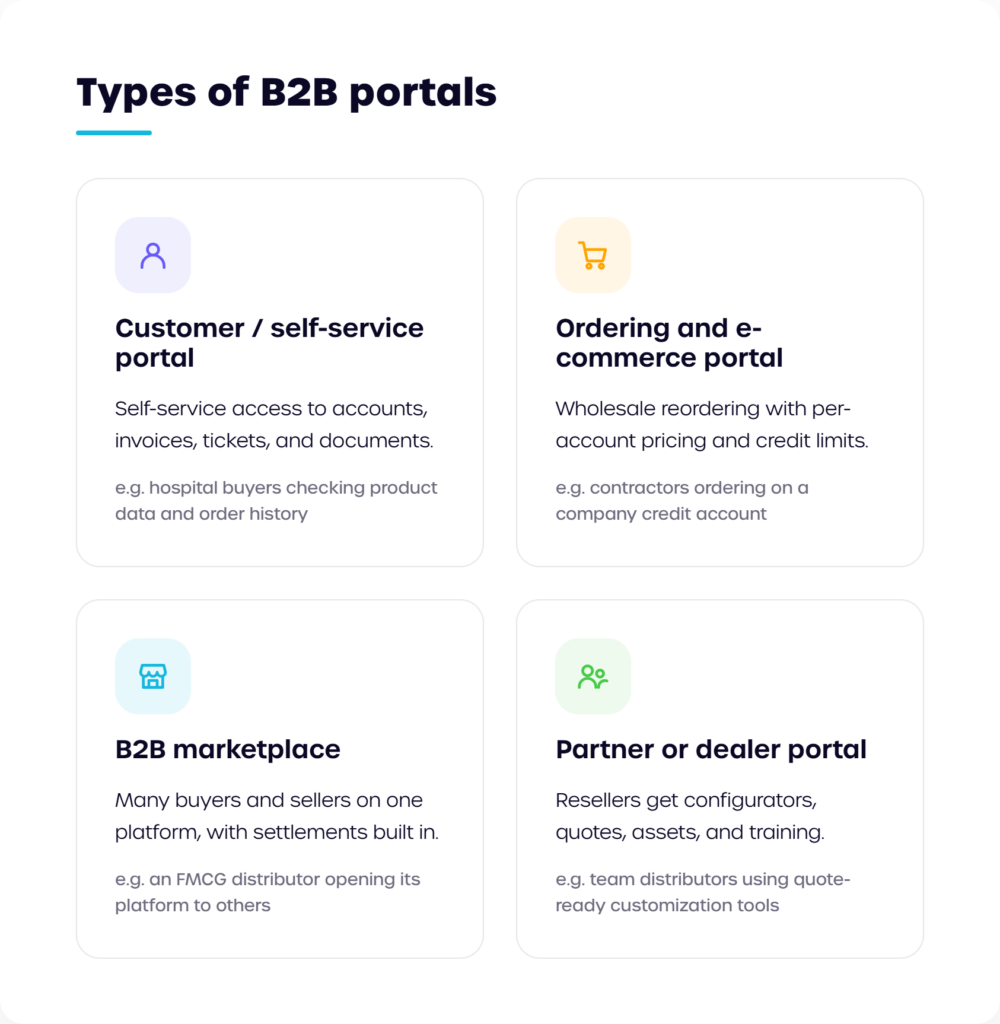
In practice, most projects fall into one of four types:
- Customer / self-service portal – business clients manage their accounts, invoices, support tickets, and documents on their own. Example: a medical device manufacturer giving hospital buyers verified access to product data and order history.
- Ordering and e-commerce portal – repeat wholesale purchasing with account-specific price lists, credit limits, and bulk reorder templates. Example: a building materials retailer letting contractors order against a company credit account.
- B2B marketplace – a multi-vendor platform connecting many buyers with many sellers, with onboarding, settlements, and dispute handling. Example: an FMCG distributor opening its ordering platform to other distributors and manufacturers.
- Partner or dealer portal – distributors and resellers access product configurators, marketing assets, quotes, and training. Example: a sportswear brand giving team distributors quote-ready customization tools.
The common thread is that a portal is never “just a website”. It is a working layer on top of your business processes – which is why the choice of a development partner matters more here than in a typical web project.
How to evaluate web app development companies for a B2B portal project?
Before we get to the list, here is the checklist we would use ourselves. It also explains how the companies below were selected:
- Named B2B case studies, not logo walls. A wall of Fortune 500 logos says nothing. Ask for a specific portal, what it does, who uses it, and what changed after launch.
- Integration experience. A portal lives or dies on its connections to ERP, CRM, PIM, and payment or logistics systems. A partner who has never synced real-time pricing from an ERP will learn on your budget.
- Long-term development model. A portal is a product, not a project. It needs a roadmap, maintenance, and a team that stays after go-live. Check how long the company’s typical client relationships last.
- Security, roles, and permissions. Business users see confidential pricing and contract data. Ask how the company handles authentication, multi-level accounts, and access control.
- UX designed for work, not marketing. B2B users process hundreds of order lines. Data tables, filters, and search matter more than animations. Look for portfolio work that reflects this.
If a company cannot point to at least one named portal with real business users, it does not belong on your shortlist – no matter how good its reviews are.
Best web app development companies for B2B portals
A note on transparency before the list – Fingoweb is our company, and yes, we put ourselves first. Rankings of web app development companies written by one of them always deserve that disclaimer. Instead of asking you to take our word for it, we apply the same standard to ourselves as to everyone else – a named portal, a description of what it actually does, and a clear note on who each company fits best. Judge accordingly.
1. Fingoweb
Fingoweb is a Kraków-based software house that has specialized in tailor-made web systems for over a decade, with long-running products in manufacturing, healthcare, real estate, and digital signage – including a CMS platform managing around 15,000 media players for IMS Sensory Media.
B2B portal example:
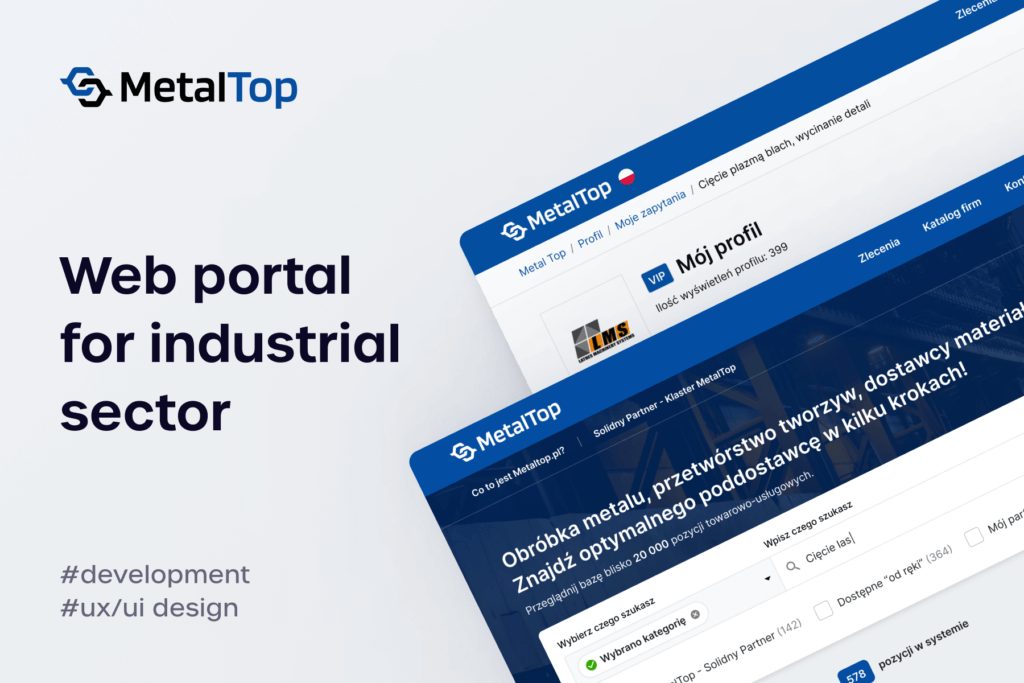
MetalTop – a machinery park management portal used by three distinct business groups: machine manufacturers, companies operating the machines, and auditors. Each role sees its own view of the same machinery data, and the platform includes automation features and AI support for routine tasks. It is a textbook manufacturing B2B portal: multiple organizations, shared data, strict permissions, and workflows that mirror how the industry actually operates.
Best for: companies that need a portal built around non-standard processes and want one partner to handle everything from analysis and UX to years of post-launch development. Fingoweb works in PHP/Laravel and React, and typically stays with clients long after go-live – some of its product relationships run for over ten years. You can see how we approach projects like this on our tailor-made systems page.
Country: Poland
2. Netguru
Netguru is one of Poland's largest software consultancies, founded in 2008 and known for work with brands such as IKEA, Volkswagen, OLX, and Vinted.
B2B portal example:
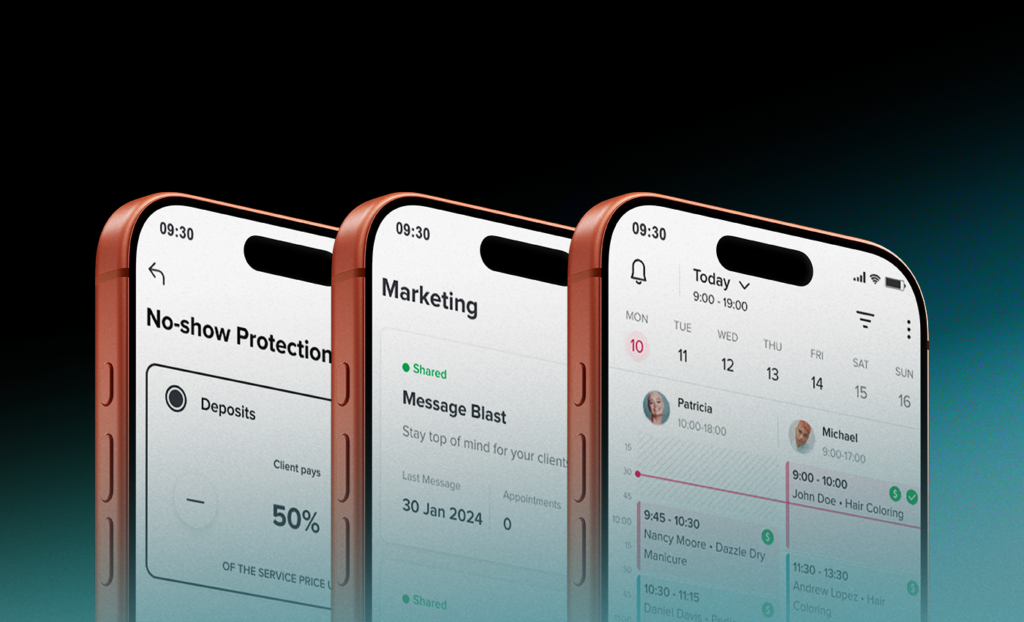
Booksy – Netguru helped the beauty booking platform expand beyond consumer scheduling into a B2B marketplace for salon supplies. The work covered e-commerce flows, search across a catalog of more than 30,000 products, and inventory management tools for service providers, turning a B2C app into a B2B ecosystem.
Best for: scale-ups and enterprises that want one of the largest web app development companies in the region, with strong design and the ability to grow the team quickly mid-project.
Country: Poland
3. ELEKS
ELEKS is an enterprise software development company with Ukrainian roots and delivery centers across Europe, working mostly with mid-size and large organizations in logistics, energy, and retail.
B2B portal example:
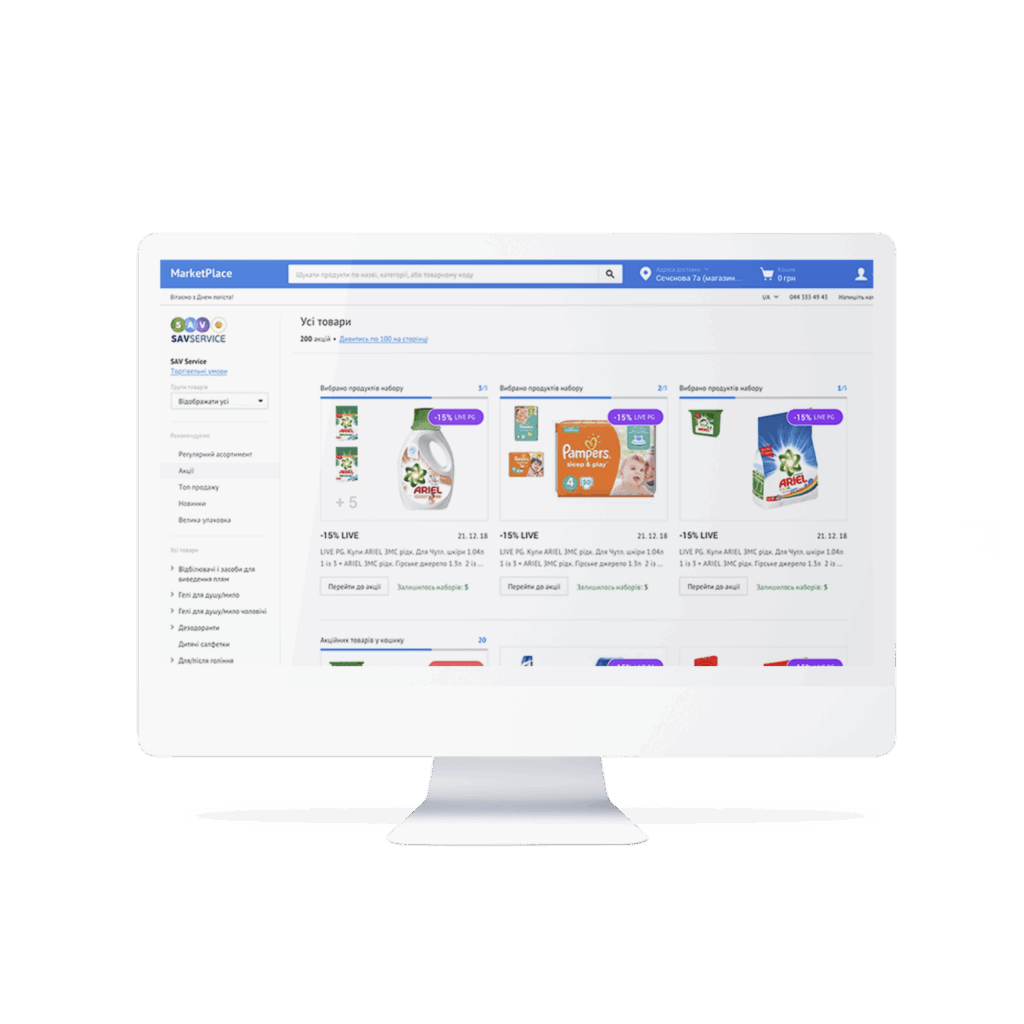
SAVSERVICE iOrder – a marketplace platform for one of Ukraine's biggest FMCG distributors. The portal lets retailers replenish stock on their own instead of waiting for a sales representative's visit, and gives distributors flexible product hierarchies and promotion rules. Within six months of launch, the number of permanent users doubled and SAVSERVICE estimated a 13% increase in sales – one of the few publicly documented portal projects with hard numbers attached.
Best for: organizations that treat the portal as an operational backbone and want a partner experienced in product discovery, not just development.
Country: Ukraine / EU offices
4. Vaimo
Vaimo is a digital commerce agency headquartered in Sweden, focused on Adobe Commerce (Magento) and composable commerce, with several hundred specialists across international offices.
B2B portal example:
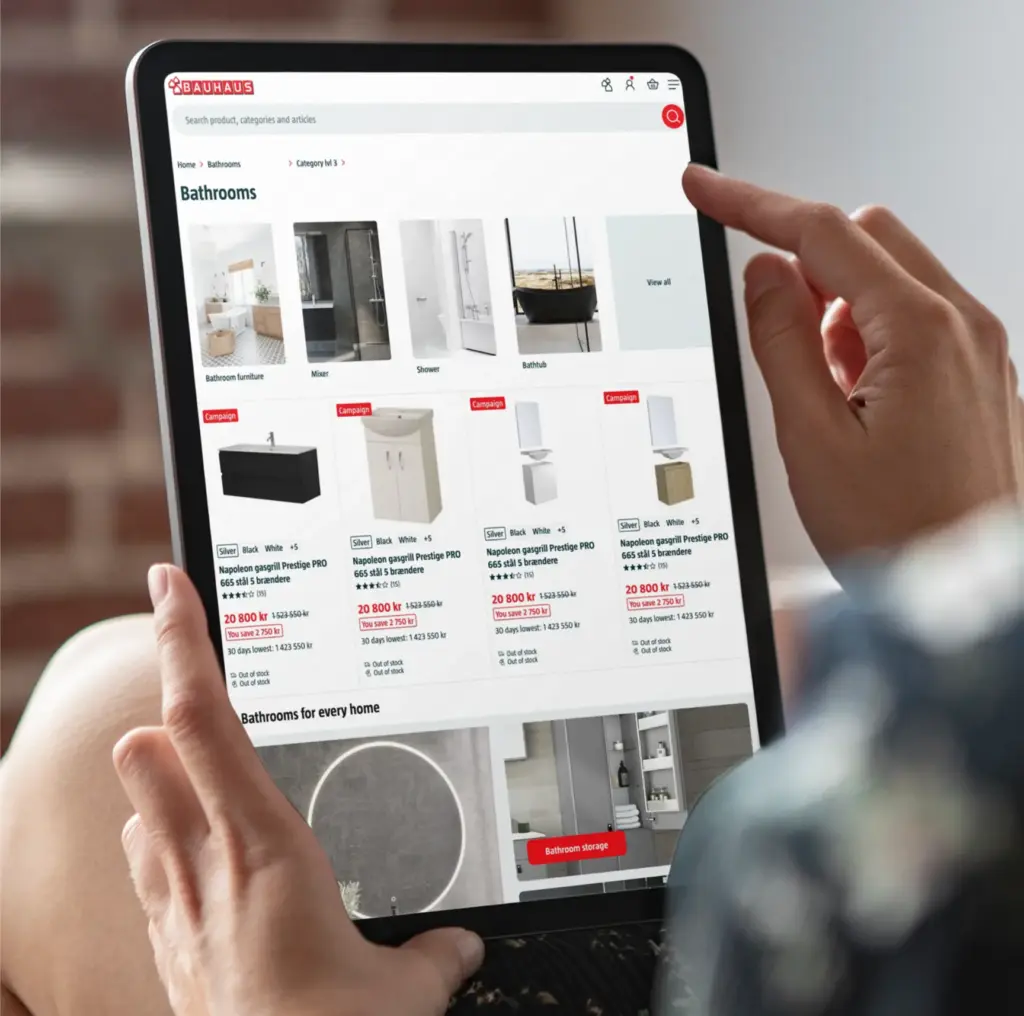
BAUHAUS Sweden – a B2B portal for the home improvement retailer where account owners manage sub-accounts, payments, and credit limits. Business customers log in with Sweden's BankID, the portal connects directly to the BAUHAUS ERP, and automated credit checks speed up account approvals. Vaimo has run the partnership since 2011 – a good illustration of the "portal as a long-term product" principle. If you need proof of scale, its Lantmännen Maskin project put an agricultural e-commerce catalog of over one million SKUs online.
Best for: retailers and distributors whose portal is primarily a commerce channel and who want to build on Adobe Commerce rather than fully custom code.
Country: Sweden
5. Scandiweb
Scandiweb is a Riga-based e-commerce agency with more than two decades of delivery, working across Magento, Adobe Commerce, and modern PWA front ends.
B2B portal example:
Macron – the Italian sportswear brand (official referee kit supplier for UEFA EURO 2024) partnered with Scandiweb to rebuild its B2B platform on Adobe Commerce. The portal serves distributors, sports clubs, and retailers in over 150 countries, with quote-ready product customization flows built for bulk teamwear orders. Scandiweb's other B2B work includes a role-based customer portal for medical device maker Cook Medical, where search and product data clarity were the core of the redesign.
Best for: brands and wholesalers with complex product customization needs and international, multi-market operations.
Country: Latvia
6. Elogic Commerce
Elogic Commerce is a Tallinn-headquartered e-commerce development company with offices across Europe and the US, and more than 500 projects delivered over 13 years – with B2B customer portals as one of its core service lines.
B2B portal example: Elogic builds self-service and ordering portals on Adobe Commerce and other platforms for clients such as SoloTop, Wexon, and Benum – wholesale and industrial suppliers that needed account-specific pricing rules, ERP integration, and automated ordering. The company's specialization is worth noting: it publishes detailed guidance on portal architecture for manufacturers and distributors, from vendor management in marketplaces to PIM-driven product data.
Best for: mid-size distributors and manufacturers that want a platform-based portal (rather than custom-built) delivered by a team that does little else.
Country: Estonia
7. Future Processing
Future Processing is a technology consultancy from Gliwice, a Microsoft partner since 2007, serving mostly UK, US, and Western European enterprises.
B2B portal example:
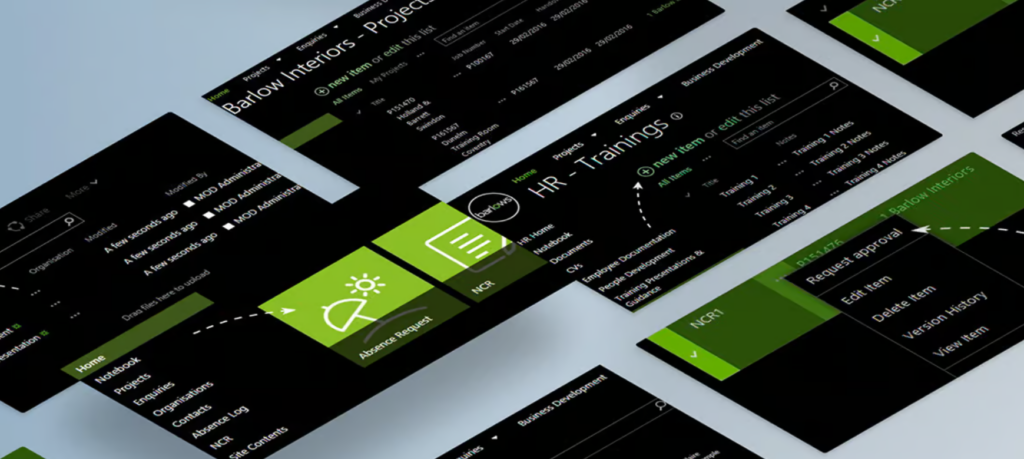
Barlow – a portal that lets the UK property management firm run several hundred projects in one place, built on the Microsoft stack. On the heavier end of the spectrum, Future Processing also supports a supply chain finance platform processing over 27 billion dollars in assets – less a "portal" in the commerce sense, more evidence that the company handles multi-tenant business systems at serious scale.
Best for: enterprises on the Microsoft/Azure stack and organizations in regulated industries that prioritize process maturity and consulting depth.
Country: Poland
Comparison at a glance
Here is how the seven web app development companies stack up side by side:
| Company | HQ | Named B2B portal | Strongest fit |
|---|---|---|---|
| Fingoweb | Kraków, PL | MetalTop – machinery park management | Custom portals around non-standard processes |
| Netguru | Poznań, PL | Booksy – B2B marketplace, 30,000+ SKUs | Scale-ups needing a large design-led team |
| ELEKS | Lviv, UA / EU | SAVSERVICE iOrder – +13% sales | Operations-critical portals with discovery phase |
| Vaimo | Stockholm, SE | BAUHAUS – credit limits, BankID, ERP | Commerce-first portals on Adobe Commerce |
| Scandiweb | Riga, LV | Macron – 150+ countries, teamwear quotes | Multi-market brands with product customization |
| Elogic Commerce | Tallinn, EE | SoloTop, Wexon, Benum portals | Distributors wanting platform-based builds |
| Future Processing | Gliwice, PL | Barlow – property project portal | Microsoft-stack enterprises |
How much does B2B portal development cost?
There is no honest single number, because a B2B portal for 50 dealers and a marketplace for thousands of retailers are different projects by an order of magnitude. Four factors drive most of the budget: the number and depth of integrations (ERP sync is usually the biggest single item), the complexity of roles and permissions, whether you build on a commerce platform or fully custom, and how much of the old process needs to be redesigned rather than digitized as-is.
Two practical rules keep budgets sane. First, start with an MVP that covers the one workflow your customers repeat most – usually ordering or reordering – and expand from there; ELEKS's SAVSERVICE project followed exactly this path, from a four-week discovery phase to an MVP to a platform. Second, compare the quote against what the portal replaces: manual order entry, phone-based reordering, and the errors both produce. A portal that shifts even part of that work to self-service tends to pay for itself faster than most web projects.
If you want to understand what goes into a project like this before talking to any of the web app development companies above, we described the full process – from workshops to deployment – in our guide to web application development.
FAQ about web app development companies
What is a B2B portal?
A B2B portal is a secure web application where business customers, partners, or suppliers log in to interact with a company – placing orders, viewing account-specific pricing, tracking deliveries, or managing documents. It differs from a public website in that everything happens behind authentication, with roles, permissions, and integrations with back-office systems.
What is the difference between a B2B portal and a B2B website?
A website presents information to everyone; a portal executes transactions for authenticated users. A B2B website might list your product catalog, while a B2B portal shows each logged-in customer their negotiated prices, credit limit, order history, and lets them reorder in a few clicks with data flowing straight into your ERP.
How long does it take to build a B2B portal?
A focused MVP – one core workflow, one or two integrations – typically takes 3 to 6 months. Full platforms with marketplace features, multiple user roles, and several system integrations are built in stages over a year or more. The discovery phase at the start (2–6 weeks) is the best predictor of a realistic timeline.
Should I buy off-the-shelf B2B portal software or build a custom one?
Off-the-shelf portal software works well when your sales process is standard and you need to launch fast. Custom development wins when your processes are your competitive advantage, when integrations go deep into legacy systems, or when license costs scale painfully with the number of users. Several web app development companies in this ranking work in both models – ask each one to argue against their own default option and see how honest the answer is.
How do I choose between these web app development companies?
Shortlist two or three whose named portals resemble your project, then ask each for a discovery workshop proposal rather than a fixed quote. How a company approaches the analysis phase – the questions it asks about your users, integrations, and processes – tells you more about the future collaboration than any portfolio page. And if a company cannot name a single comparable B2B portal it has built, keep looking.