














The FDA’s list of AI-enabled medical devices passed 1,600 entries in its September 2026 update, and 335 of them were authorized in 2025 alone, more than in any year before. Three in four are radiology software. The list still misses most of the AI in healthcare that clinicians touch every day, because ambient scribes, coding assistants and literature search tools generally sit outside the FDA’s definition of a medical device and never go through a submission.
Clinicians have moved quickly. In the American Medical Association’s 2026 physician survey, 72% of physicians said they use at least one AI tool, up from 38% in 2023. Most lists of AI in healthcare examples stop at the product name, and the name explains little. Epic’s sepsis model and the TREWS system developed at Johns Hopkins read the same kind of EHR data to catch the same disease. Epic’s missed two thirds of sepsis cases in an independent validation, while TREWS was linked to an 18.7% relative drop in mortality. The difference came from how each system was built, validated and wired into clinical work, so this article pairs eight real deployments with the architecture behind them. The last section covers the decisions every build shares, from data to regulation, the same ones we work through with clients on our healthcare software development projects.
AI in healthcare examples from clinical care
AI in healthcare means software that learns from medical data, such as images, vital signs, records or recorded speech, and uses it to flag, predict, draft or decide something that would otherwise take a clinician’s time. Diagnostic AI is where the FDA list lives, and imaging dominates it. The four examples below cover the main patterns: software that triages a scan, software that takes over part of a reading workload, software that makes a screening decision on its own, and risk models running on live hospital data. Each gives a different answer to the question that shapes every clinical build: who acts on the output, and how fast.
Stroke triage that alerts the specialist's phone
Viz.ai's ContaCT was the first AI imaging software the FDA authorized for stroke, through the De Novo pathway in February 2018. Its job is narrow. The software analyzes CT images of a suspected stroke patient for a large vessel occlusion and, if it finds one, sends a notification to a neurovascular specialist while the first-line reader is still doing the standard review.
Most of the build is plumbing around that model. Images have to leave the hospital's imaging archive (PACS) automatically, in the DICOM format the scanners produce, reach the model, and come back as an alert on a phone with a preview of the scan. The FDA spelled out the limits: the specialist still reviews the images on a clinical workstation, and the software is not meant to make or confirm a diagnosis. That restraint created a new FDA category, computer-aided triage, which later products used as their route to a faster 510(k) clearance.
The evidence is unusually good for this field. In a stepped-wedge randomized trial at four Houston stroke centers, published in JAMA Neurology in 2023, door-to-groin puncture time fell by 11.2 minutes across 243 patients. Functional outcome at 90 days did not change measurably. Eleven minutes matter in stroke care, but faster logistics and better results are two separate claims, and vendor material tends to blur them.
A second reader for breast cancer screening
European screening programs read every mammogram twice, which makes radiologist time the bottleneck. The Swedish MASAI trial tested whether AI could take one of those reads. The software, ScreenPoint's Transpara, gave every exam a risk score from 1 to 10, calibrated so that roughly a tenth of exams fell into each band. Exams scoring 1 to 9 went to a single radiologist, exams scoring 10 went to two, and readers saw the AI's marks on the higher-risk images.
Results across 105,934 women, published in The Lancet Digital Health in 2025:
- cancer detection rose from 5.0 to 6.4 per 1,000 women screened, 29% more, with no rise in false positives;
- screen-reading workload fell by 44%;
- in the primary endpoint, published in The Lancet in January 2026, interval cancers (those diagnosed between screening rounds) stayed non-inferior at 1.55 per 1,000 with AI against 1.76 without.
Here the AI works as a routing rule inside the reading worklist: the score decides how many humans look at each exam. That makes the calibration the product. Set the threshold too low and the workload savings disappear, set it too high and cancers go to a single reader who was never meant to carry them alone.
Autonomous eye exams in primary care
IDx-DR, now sold as LumineticsCore, is the clearest case of AI in healthcare making a clinical decision without a doctor looking at the result. The FDA authorized it in April 2018 as the first device to give a screening decision without a clinician interpreting the image. It checks people with diabetes for diabetic retinopathy in a primary care office, where no eye specialist is present.
The trial behind the authorization describes the workflow in detail:
- A staff member with no previous imaging experience completes a four-hour training course, then takes two photos of each retina with one specific camera, the Topcon NW400.
- The software checks image quality on the spot and asks for a retake, up to three attempts, after which the patient's pupils are dilated and the cycle repeats.
- The diagnostic model returns one of three results: more-than-mild diabetic retinopathy detected, not detected, or insufficient image quality.
Most of the engineering went into the parts around the model: a quality check that turns a novice into a reliable photographer, and a fixed algorithm the FDA could evaluate like a lab test. Autonomy was earned by narrowing the job until it could be tested that way. The algorithm was locked before the study started, and across 900 participants at 10 primary care sites it reached 87.2% sensitivity and 90.7% specificity, with 96.1% of participants getting a usable result.
Two sepsis alerts built on the same EHR data
Sepsis gave hospital AI its most public failure and one of its better successes. Both systems read the same inputs: vital signs, lab results and orders streaming through the electronic health record.
Epic's Sepsis Model shipped inside the EHR at hundreds of US hospitals. When researchers at Michigan Medicine validated it independently on 38,455 hospitalizations, published in JAMA Internal Medicine in 2021, it scored an area under the curve of 0.63, on a scale where 0.5 is a coin toss and 1.0 is perfect. It missed 67% of the patients who developed sepsis and fired alerts for 18% of all hospitalized patients, so staff chased a long list of false alarms to find a few real cases. Epic reworked the model in 2022 and now recommends training it on each hospital's own data before use.
TREWS took a different route into the workflow. Its alert appears in the EHR together with the factors behind it, and a clinician has to evaluate it and either confirm or dismiss it. Across 590,736 monitored patients at five hospitals, providers evaluated 89% of alerts, and patients whose alert was confirmed within three hours had an 18.7% lower relative mortality, according to the study in Nature Medicine. The study was observational, and the senior author is affiliated with Bayesian Health, the company that now sells TREWS.
Read side by side, the gap between the two comes from three things around the algorithm: validation on the hospital's own patients, an alert that explains itself, and a confirmation step clinicians used in practice. A sepsis model that nobody trusts enough to act on has the same clinical value as no model at all.
| Example | Input data | Where it plugs in | Human step | US regulatory route | Strongest evidence |
|---|---|---|---|---|---|
| Viz.ai ContaCT (stroke) | CT angiography images | Imaging archive (PACS) and the specialist's phone | Specialist reviews images on a workstation | De Novo, 2018 (computer-aided triage) | Randomized trial, 4 centers: door-to-groin −11.2 min |
| Transpara in MASAI (mammography) | Screening mammograms | Radiologists' reading worklist | One or two radiologists read every exam | 510(k), 2018; CE-marked in the EU | Randomized trial, 105,934 women: +29% detection, −44% workload |
| IDx-DR / LumineticsCore (diabetic retinopathy) | Two retinal photos per eye | Camera in the primary care office | None for the screening result; referral if positive | De Novo, 2018 (autonomous) | Prospective trial, 900 people: 87.2% sensitivity, 90.7% specificity |
| TREWS (sepsis) | Vitals, labs and orders from the EHR | Alert inside the EHR | Clinician confirms or dismisses each alert | 510(k), 2026 (per the company) | Observational, 590,736 patients: −18.7% relative mortality |
AI in healthcare beyond the diagnosis
Most spending on AI in healthcare now goes to work around the diagnosis. Menlo Ventures estimated that healthcare organizations spent $1.4 billion on generative AI tools in 2025, $600 million of it on ambient scribes and $450 million on coding and billing automation. These products mostly fall outside FDA oversight, which gets them to market faster and puts the burden of proof on the hospital that buys them.
Ambient scribes that draft the visit note
An ambient scribe listens to the visit and writes the first draft of the clinical note. Kaiser Permanente made the biggest bet so far, rolling out Abridge across 40 hospitals and more than 600 medical offices in August 2024. In Northern California, 7,260 physicians used ambient scribes in 2,576,627 encounters over 63 weeks and saved an estimated 15,791 hours of documentation time, according to a report in NEJM Catalyst.
Under the hood, every ambient scribe runs the same four-step pipeline:
- Capture – an app on the clinician's phone records the conversation once the patient has consented.
- Transcription – a speech model turns the audio into text and labels who said what.
- Drafting – a large language model turns the transcript into a structured note (history, examination, assessment, plan) in the format the specialty expects.
- Review – the clinician edits and signs, and only then does the note enter the record.
The last step carries the clinical risk. Speech models occasionally produce words nobody said, and a fluent note tempts the clinician to skim. Kaiser had more than 1,000 clinicians grade draft notes before the national rollout. Meanwhile the EHR vendors are building the feature in: Epic released its own AI Charting in February 2026, and Microsoft's Dragon Copilot has been generally available in the US since May 2025. A new scribe now has to do something the EHR's built-in one won't.
The consultation assistant we scope for healthcare clients follows the same pipeline with a narrower target: record the conversation, analyze it and fill specific fields in the patient record, such as symptoms, medications or follow-up dates, for the clinician to confirm.
Coding tools and the insurers' AI pushback
Hospitals also point AI at the revenue cycle, with software that reads the record and suggests diagnosis and procedure codes. In September 2026 the Blue Cross Blue Shield Association published an analysis linking hospitals' AI coding tools and ambient scribes to about $942 million in added costs for its plans. About $653 million of that came from extra secondary diagnoses, such as anemia or low sodium, that moved 55,158 hospital stays into higher-paying categories without a matching change in treatment.
Read it with care: BCBSA represents insurers, the analysis is not peer-reviewed, and its wording is hedged. Insurers run AI on claims too, so the newest fight over AI in healthcare is software arguing with software. For anyone building documentation or coding tools, the lesson is an audit trail. Every suggested code needs a link back to the sentence that supports it and a log of who accepted it, because an auditor will ask for exactly that trail.
Clinical search over literature and patient records
OpenEvidence is the most widely used clinical search tool, by its own count. The company told NBC News that about 65% of US doctors used it in April 2026, across nearly 27 million clinical encounters. The architecture is retrieval first, generation second: the system searches licensed content from journals such as NEJM and JAMA and guideline bodies such as the NCCN, then a language model writes an answer with citations to the passages it used. The licensing deals are the hard-to-copy part. The service is free to clinicians and funded by pharmaceutical advertising.
Searching a hospital's own records applies the same pattern to private data, an approach called retrieval-augmented generation. Discharge summaries, lab reports and referral letters are split into passages and stored as numeric vectors in a vector database. A clinician types "show results of patients with similar symptoms", the system pulls the closest passages first, and the model answers only from them, with links to each source document. The semantic search over medical documentation we offer healthcare clients works this way.
Two details decide whether such a system is safe to deploy. Permissions apply at retrieval time, so a user only gets passages from records they could open in the EHR. And every answer cites its sources, because a clinician needs to check a summary before acting on it.
Exercise and posture analysis on the patient's phone
Kaia Health's Motion Coach watches a patient exercise through the phone's camera and corrects their form in real time. In a 2021 study in JMIR, 24 patients with knee or hip osteoarthritis performed six exercises, and the app's corrections matched a physiotherapist's 82.8% of the time, against 83.3% agreement between two physiotherapists. The sample was small and Kaia employees co-authored the study. The architecture is the interesting part.
The build has three layers:
- A pose-estimation model finds body landmarks in every video frame. Google's open MediaPipe Pose Landmarker, for example, returns 33 landmarks and runs on Android, iOS and the web.
- The app turns those landmarks into joint angles and movement paths.
- Rules written by clinical experts compare the movement against target ranges and trigger feedback. In Kaia's case, staff with medical, physiotherapy or sports science training configured them in advance.
Kaia's network runs entirely on the phone, so no raw video ever leaves the device. That one architectural choice removes the hardest privacy question before a compliance review even starts.
We built this kind of feature into a mobile training app for a healthcare client. The app uses neural networks and a vector database to run 32 movement checks on body keypoints, scores the user's exercise form in real time and adjusts the instructions to their posture and body proportions. The same pattern extends to rehabilitation tracking and fall detection, and for at-home programs it sits naturally next to remote patient monitoring.


Building AI in healthcare: the decisions behind every example
Strip the product names away and every AI in healthcare example above comes down to four decisions: where the data comes from, which model does the work, where the output lands, and which rules apply. Get one wrong and the others cannot save it, as Epic learned with sepsis. AI healthcare app development budgets follow from the same choices, and our breakdown of healthcare software development cost shows how far AI features move the total.
Data sources, labels and de-identification
Every AI in healthcare product depends on a data source that already exists where it runs: CT images in PACS, mammograms in a screening program, vitals and labs in the EHR, audio in the consultation room, video from the patient's phone. Training data has to resemble runtime data. A model built on one hospital's scanners, coding habits or patient mix can lose accuracy at the next one, which is why Epic now tells hospitals to retrain its sepsis model locally.
The label deserves more scrutiny than it usually gets. In a study published in Science, Obermeyer and colleagues examined a widely used algorithm that ranked patients for extra care by predicting their future healthcare costs. Because less money was spent on Black patients with the same level of illness, the algorithm scored them as healthier. Correcting it would have raised the share of Black patients flagged for extra help from 17.7% to 46.5%. Cost looked like a sensible stand-in for need. It was the wrong one.
De-identification gets harder with every new data type. HIPAA's Safe Harbor method strips 18 identifiers from text records, but audio and video resist it, because a voice or a face identifies a person by itself. GDPR treats pseudonymized data as personal data, so swapping names for codes leaves a dataset inside its scope. Decide early where processing happens: on the device, as in Kaia's case, inside your own cloud account under a business associate agreement, or at a vendor.
Model choice: an API, an adapted model or your own
Three routes cover almost every AI healthcare app development project, and most products combine at least two. The ambient scribe pairs a specialized speech model with a general language model, and Kaia pairs a trained pose model with rules written by people.
| Route | What you build | Data you need | Typical uses | Main risk |
|---|---|---|---|---|
| Hosted model API under a BAA | Prompts, guardrails and the workflow around the model | Test cases from your domain | Drafting notes, summaries, patient messages, form filling | Output you cannot fully predict; vendor terms on retention |
| Adapted model (retrieval or fine-tuning) | A retrieval pipeline over your documents, or a model tuned on your examples | Your documents, or a labeled set of your own examples | Search over records and guidelines, specialty note formats | Stale or badly permissioned sources; evaluation effort |
| Trained or specialized model | Your own model, usually on an open architecture | Large sets of labeled images, signals or video | Imaging, pose and movement analysis, risk prediction | Data collection, validation and, often, a regulatory submission |
In our experience, the choice between retrieval and fine-tuning is the one teams building AI in healthcare get wrong most often. Retrieval fits when the knowledge changes or has to be cited, fine-tuning fits when the output format or style has to change, and our comparison of RAG and fine-tuning goes through the trade-offs. On cost, semantic search over documentation usually sits at the cheap end and video-based movement analysis at the expensive end, because the second needs real footage, tuning and a long test cycle.
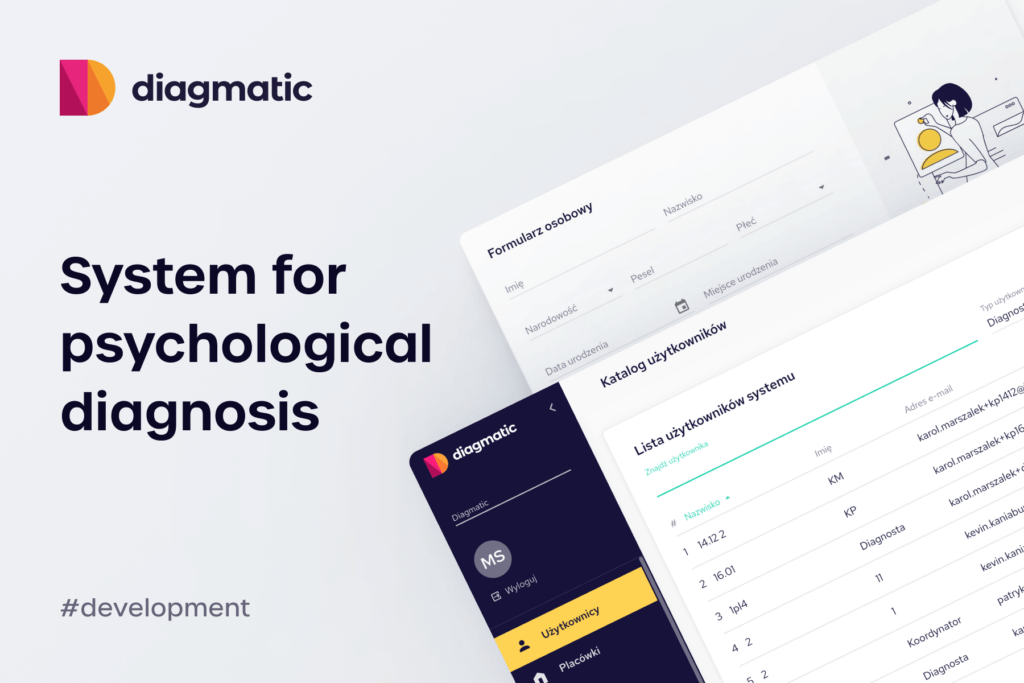
Some features need no machine learning at all. In the Diagmatic diagnostic system we built for psychological and pedagogical assessment of children, the scores come from mathematical models designed by psychometry experts, which we implemented as algorithms returning valid results in real time. When the science is settled, deterministic code is easier to validate than any model.
Integration points and the human sign-off
Where the output lands decides whether anyone uses it. Clinicians work inside the EHR, radiologists inside the reading worklist, patients on their phones, and a feature that needs a separate window loses to all three. EHR integration usually runs through HL7 FHIR APIs or the vendor's own app framework, and write access depends on each hospital's policy and the vendor's review. Imaging runs through PACS and DICOM. Phone-based products add Bluetooth devices, the camera and the microphone, with their own failure modes, which our guide to medical device integration covers in detail.
The human step needs the same design attention as the model. The FDA's January 2026 guidance on clinical decision support asks for plain-language information about the basis of each recommendation and warns about automation bias, the habit of accepting a machine's output without checking it. In practice that translates into a few rules:
- Show the reason. TREWS displays the factors behind each alert.
- Make confirming or dismissing one action, with an optional reason that feeds model monitoring.
- Count alerts per patient per day before go-live. The Epic model alerted on 18% of patients, and alert volume decides whether staff read the next one.
- Log every acceptance and override. The same log serves the auditor, the regulator and the next model update.
Regulation and privacy in the US and the EU
For AI in healthcare, regulatory classification decides how much of the work above becomes mandatory. The table summarizes the rules as of October 2026.
| United States | European Union | |
|---|---|---|
| Is the software a medical device? | Yes if it analyzes images or signals, or drives diagnosis or treatment. Clinical decision support that shows clinicians its basis can fall outside, and the January 2026 guidance extended enforcement discretion to some single-recommendation tools | MDR Rule 11: software that informs diagnostic or therapeutic decisions is class IIa at minimum, IIb or III depending on the possible harm |
| AI-specific rules | Predetermined change control plans let a cleared model update within a pre-agreed protocol (final guidance December 2024, re-issued August 2025). Certified EHRs must expose source attributes for decision support since January 2025 | AI Act: AI in a medical device that needs notified-body review counts as high-risk, with obligations from 2 August 2028 after the 2026 Digital Omnibus |
| Health data | HIPAA: a business associate agreement with every vendor that touches PHI, including the model provider | GDPR Article 9: health data is a special category, which requires a specific legal basis and usually a data protection impact assessment |
| Wellness carve-out | The January 2026 general wellness guidance covers non-invasive estimates with no disease claims | Software with no medical purpose is not a device |
The AI Act timeline for medical devices moved back a year in 2026, and a Commission proposal to revise the MDR could change software classification again. Track it, but design to the rules in force.
On the US side, the details of each model provider's BAA matter more than the headline. OpenAI signs BAAs for most API endpoints on request, Amazon Bedrock and Google's Gemini Enterprise Agent Platform (formerly Vertex AI) are HIPAA-eligible, and Anthropic covers its Messages API. Several providers exclude batch processing, file storage or web search from the agreement, so a feature a developer switches on later can move patient data outside it without anyone noticing. Our guide to HIPAA-compliant app development covers the rest of the stack. Settle the regulatory classification before the model work starts, because it decides how you validate, what you log and how you ship every update after launch.
FAQ – AI in healthcare
The questions below come up most often around AI in healthcare. Each answer stands on its own, with sources where a number is involved.
How is AI used in healthcare today?
AI in healthcare today is mostly paperwork. In the AMA's 2026 survey, the most common uses among physicians were summarizing medical research and standards of care (39%), drafting discharge instructions, care plans and progress notes (30%), documenting billing codes and visit notes (28%) and summarizing charts (28%). Only 17% used AI to help with diagnosis.
What are 10 common applications of AI in healthcare?
The ten applications of AI in healthcare with the most real-world deployment are:
- Imaging triage for stroke, pulmonary embolism and fractures
- Screening support in mammography and diabetic retinopathy
- Early warning for sepsis and patient deterioration
- Ambient documentation of visits
- Medical coding and billing
- Clinical search over literature and guidelines
- Drafting replies to patient portal messages
- Alerts in remote patient monitoring
- Rehabilitation and movement analysis on phones
- Drug discovery and protein structure prediction
The first three are usually FDA-regulated devices, while most of the others are documentation or workflow software.
Is there a medical AI like ChatGPT?
Yes. OpenAI launched ChatGPT for Clinicians in April 2026, free for clinicians in the US who verify their NPI, with answers cited to medical sources and an individual BAA option for patient data. OpenEvidence is the most widely used alternative. Both are information tools meant to support professional judgment, and neither is an FDA-cleared diagnostic device, so the clinician stays responsible for every care decision.
Will AI replace doctors?
The evidence so far shows AI in healthcare taking over tasks inside a doctor's job. In the final MASAI results, AI-supported screening reached 80.5% sensitivity against 73.8% for standard double reading, and a radiologist still read every mammogram. Autonomous systems such as IDx-DR remain the exception, and the tasks shifting fastest are note-writing and coding, which few physicians will miss.
What are the risks of AI in healthcare?
The main risks of AI in healthcare are practical, and most can be designed against:
- Fluent wrong answers – an unreviewed study found OpenEvidence answered complex medical questions correctly less than 45% of the time.
- Automation bias – clinicians accept an output without checking it, a risk the FDA now names explicitly.
- Biased training labels – a proxy such as cost can encode unequal access to care.
- Alert fatigue – too many alerts and staff stop reading them.
- Billing inflation – AI coding tools are now under insurer scrutiny.
- Privacy – voice and video identify a person even after other identifiers are removed.
Each of these is cheaper to handle in the architecture than in an incident review.
Does AI software in healthcare need FDA approval?
It depends on what the software does. Software that analyzes medical images or physiological signals, or drives a diagnosis or treatment, is a medical device, while documentation and administrative tools generally are not. Most AI devices reach the market through 510(k) clearance by showing equivalence to an existing product, and the De Novo route is reserved for first-of-a-kind devices, which is how Viz.ai's stroke triage and IDx-DR reached the market in 2018.